
Last updated September 10, 2026
Level 1 sweep and inspection to the NFPA 211 annual standard - flue, crown, cap, and flashing checked and photographed
Chimney sweep logs do not sweep chimneys. They loosen some creosote - which then falls where a brush and vacuum still have to collect it.
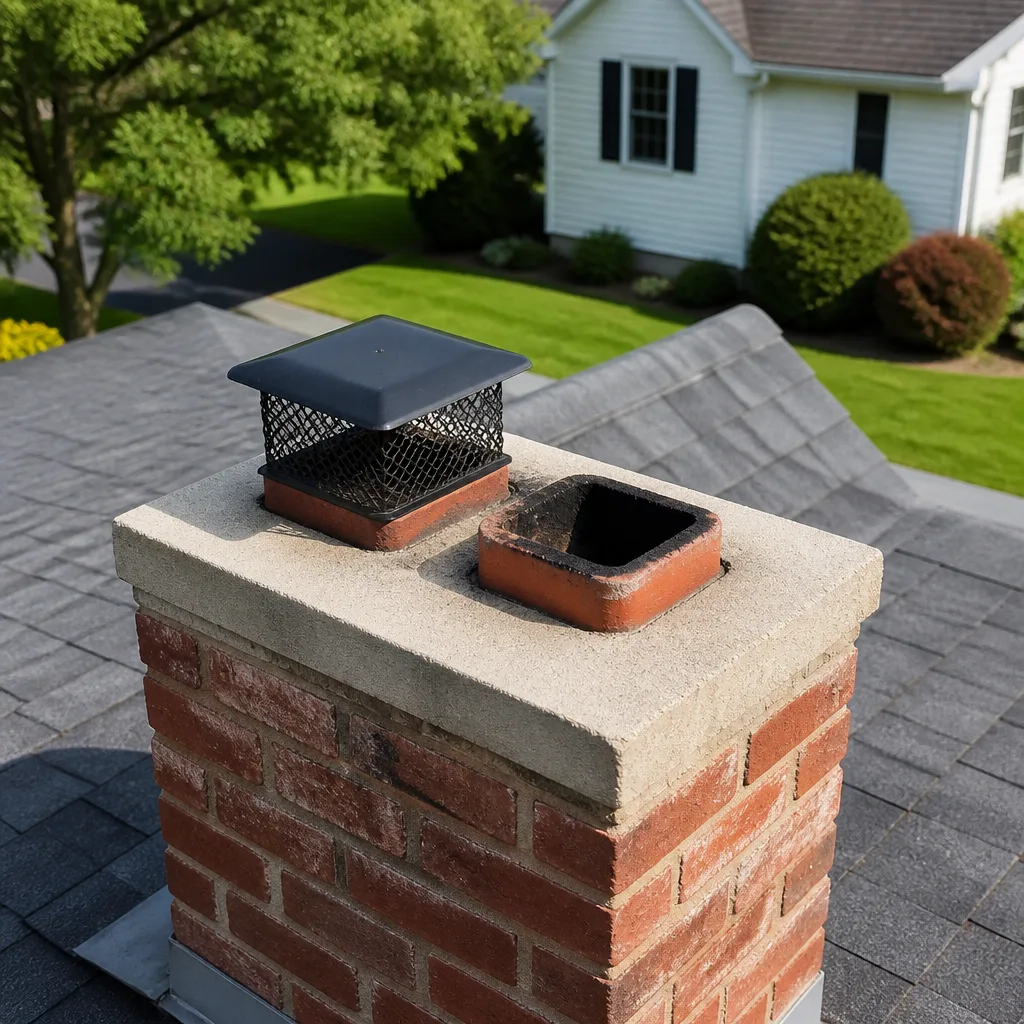
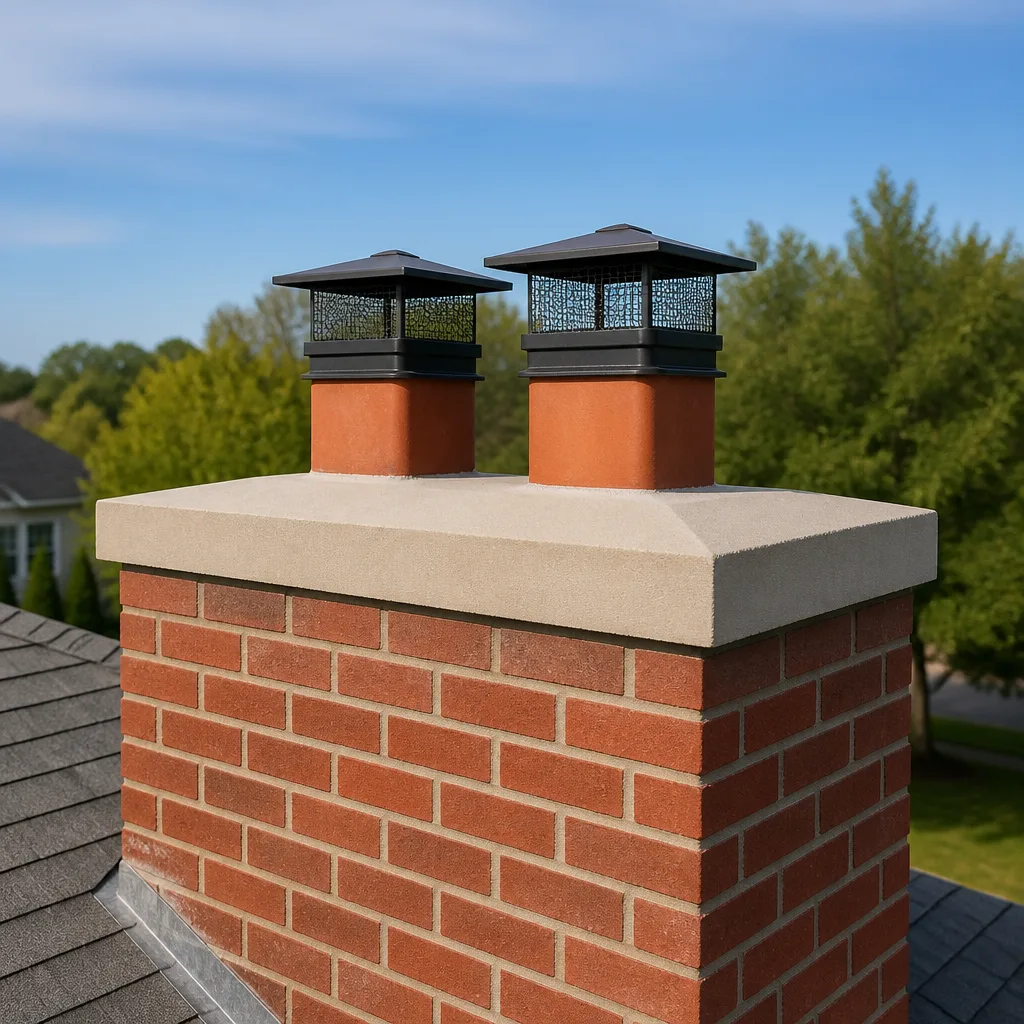
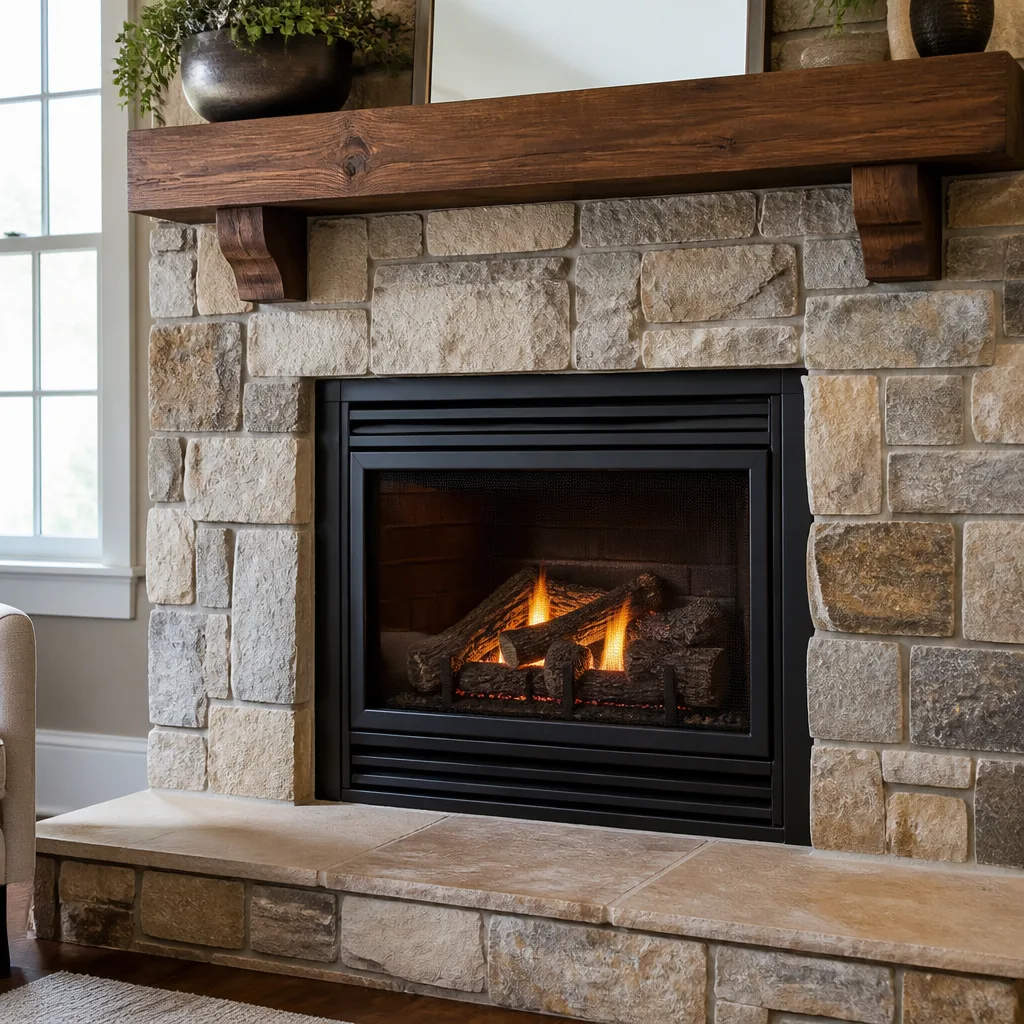
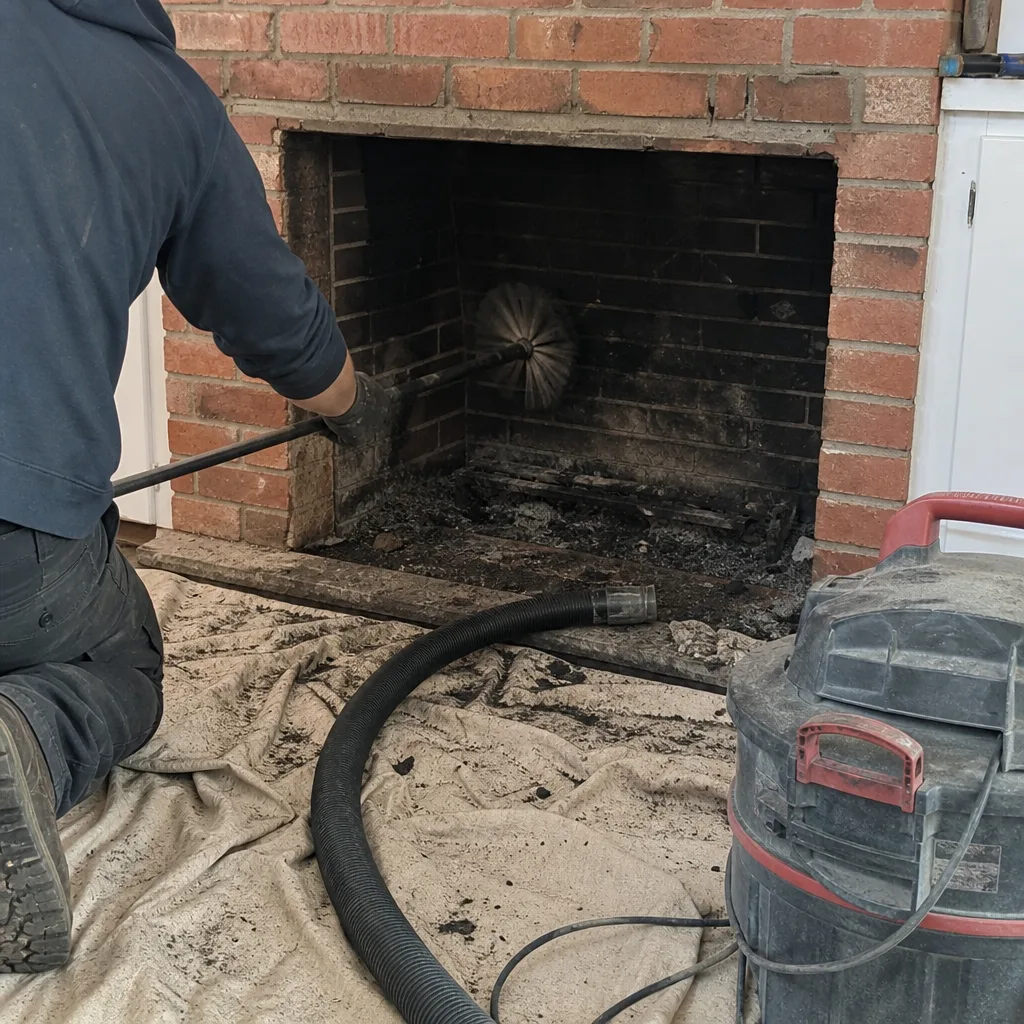 Before
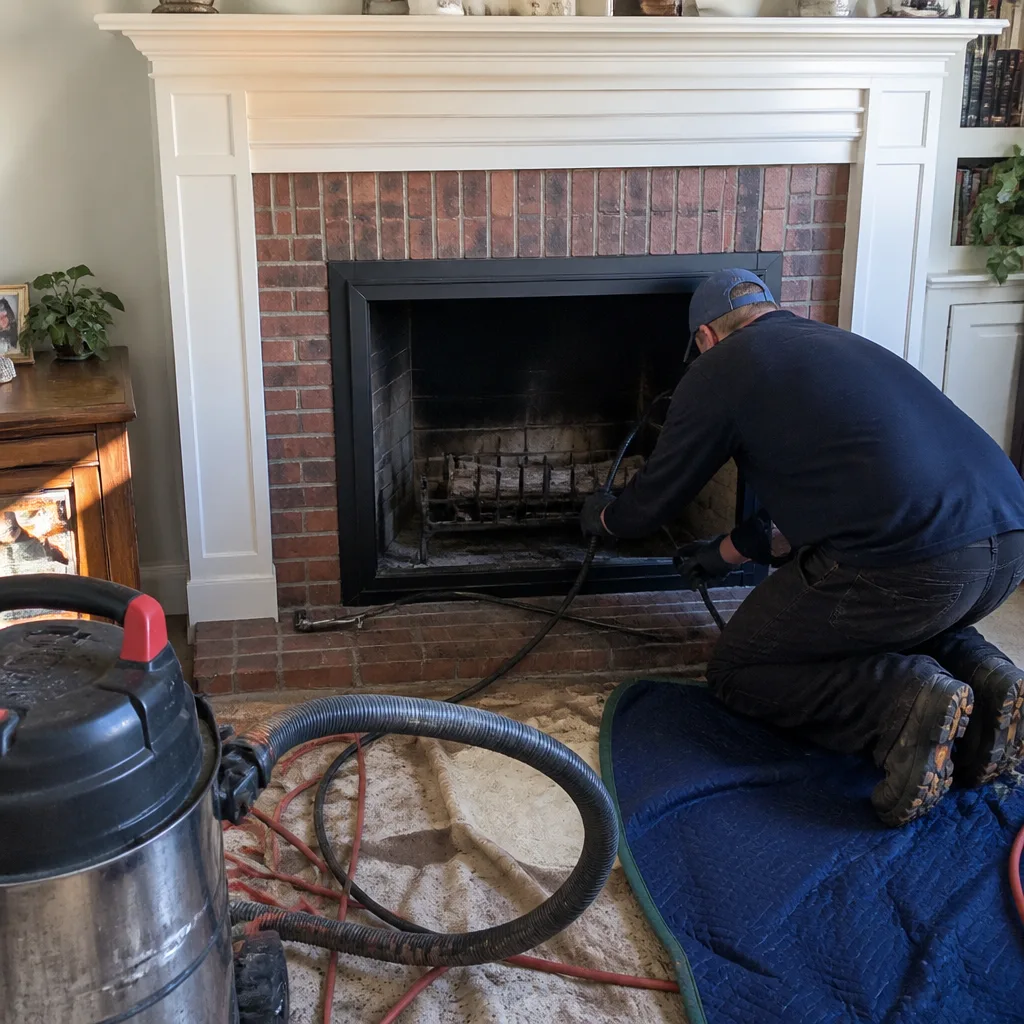 After
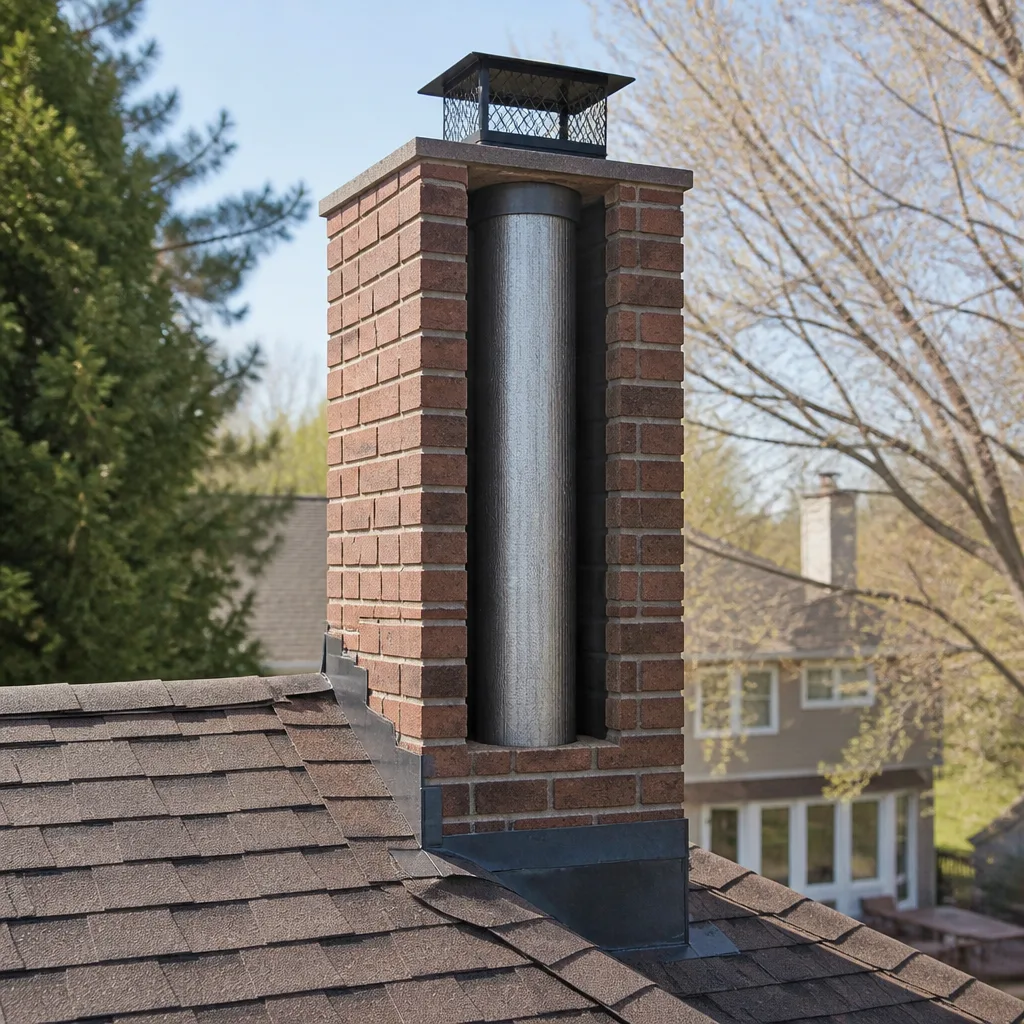
After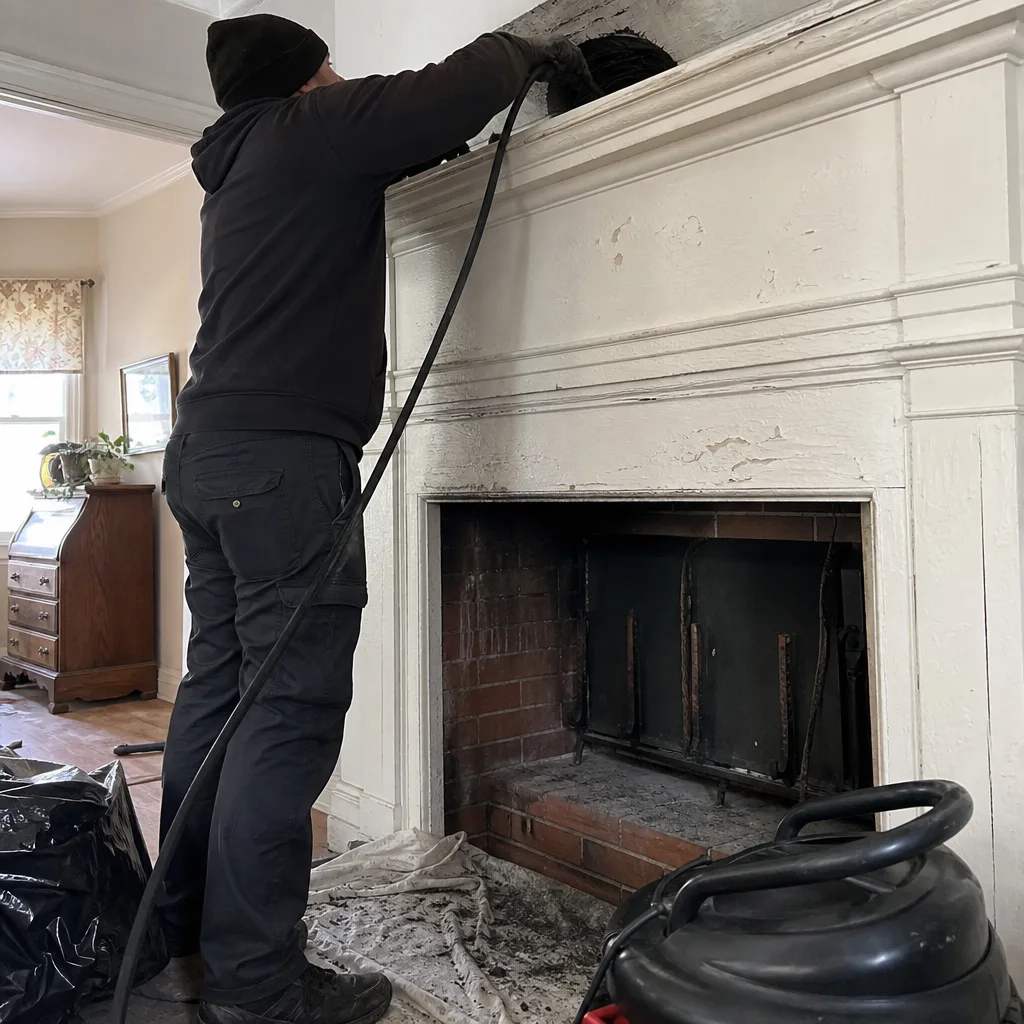 Before
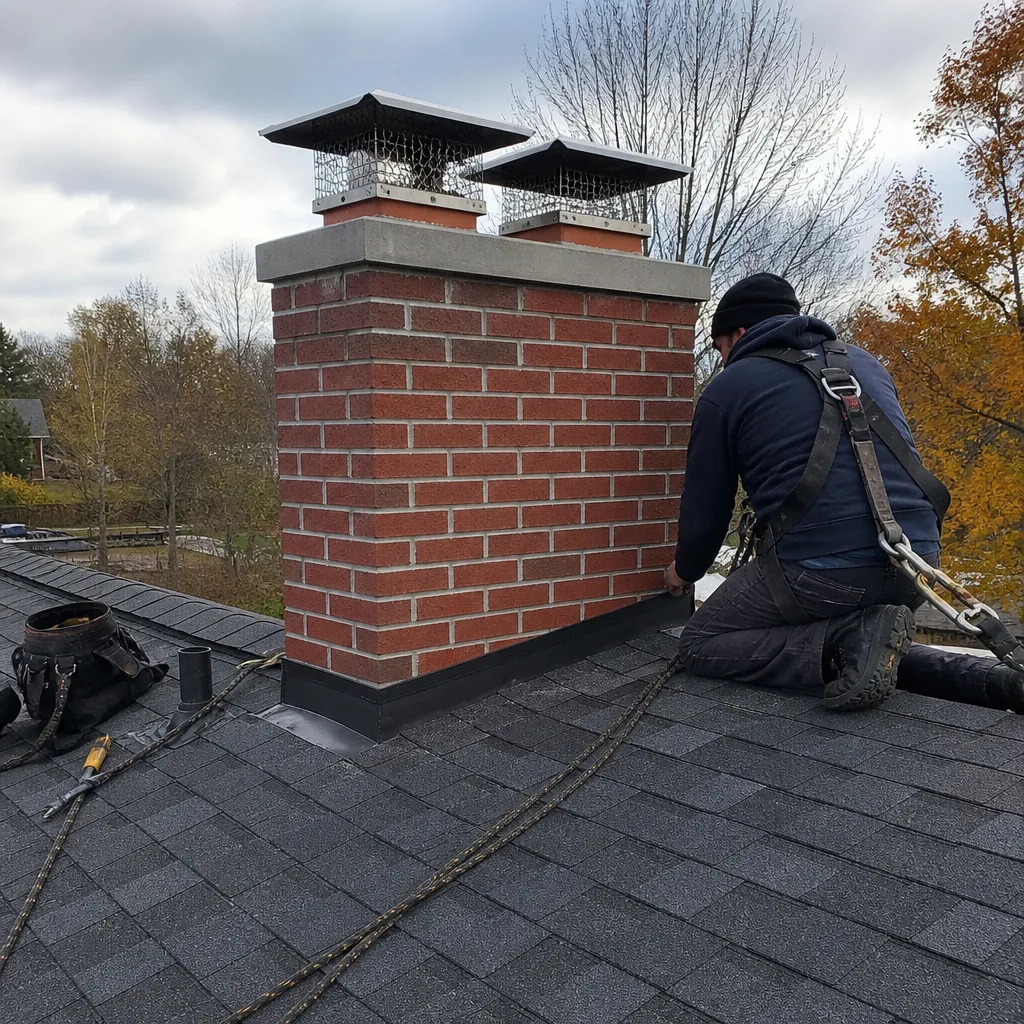 After
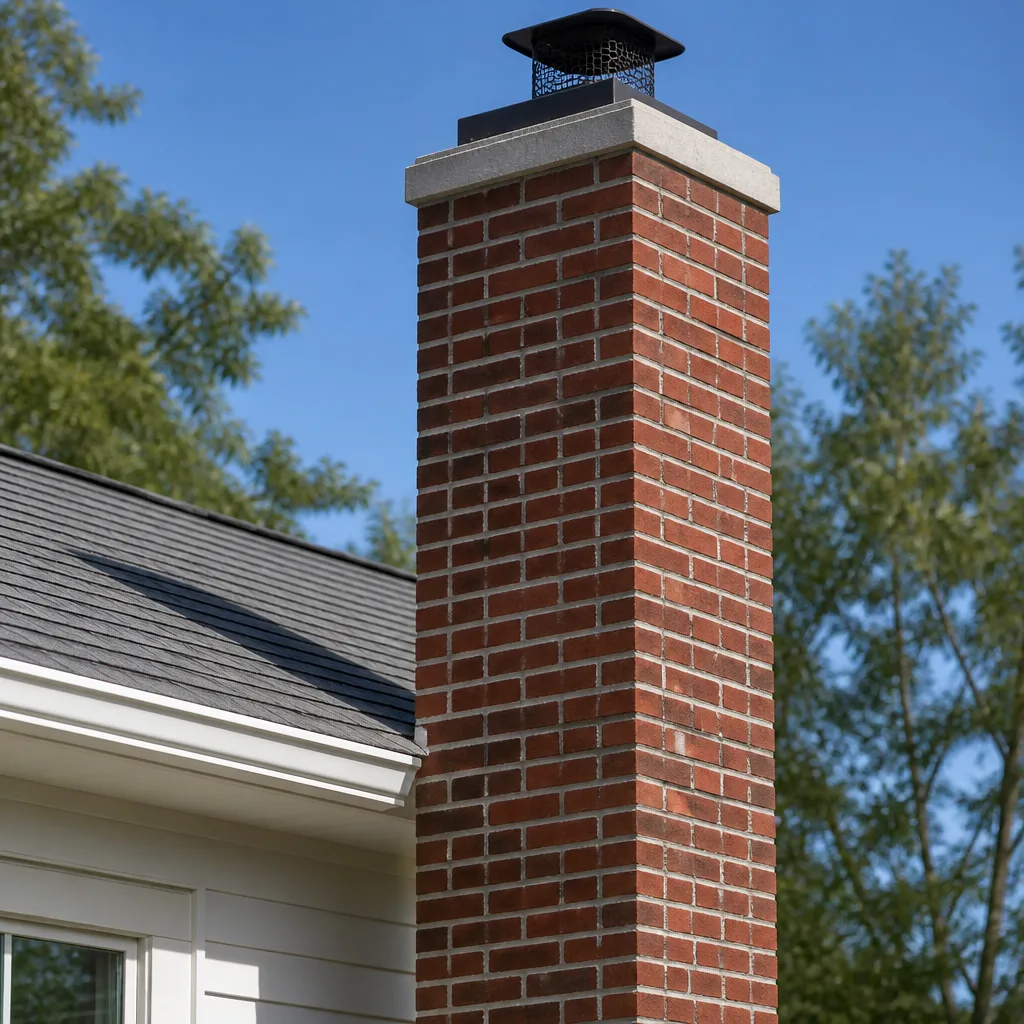
After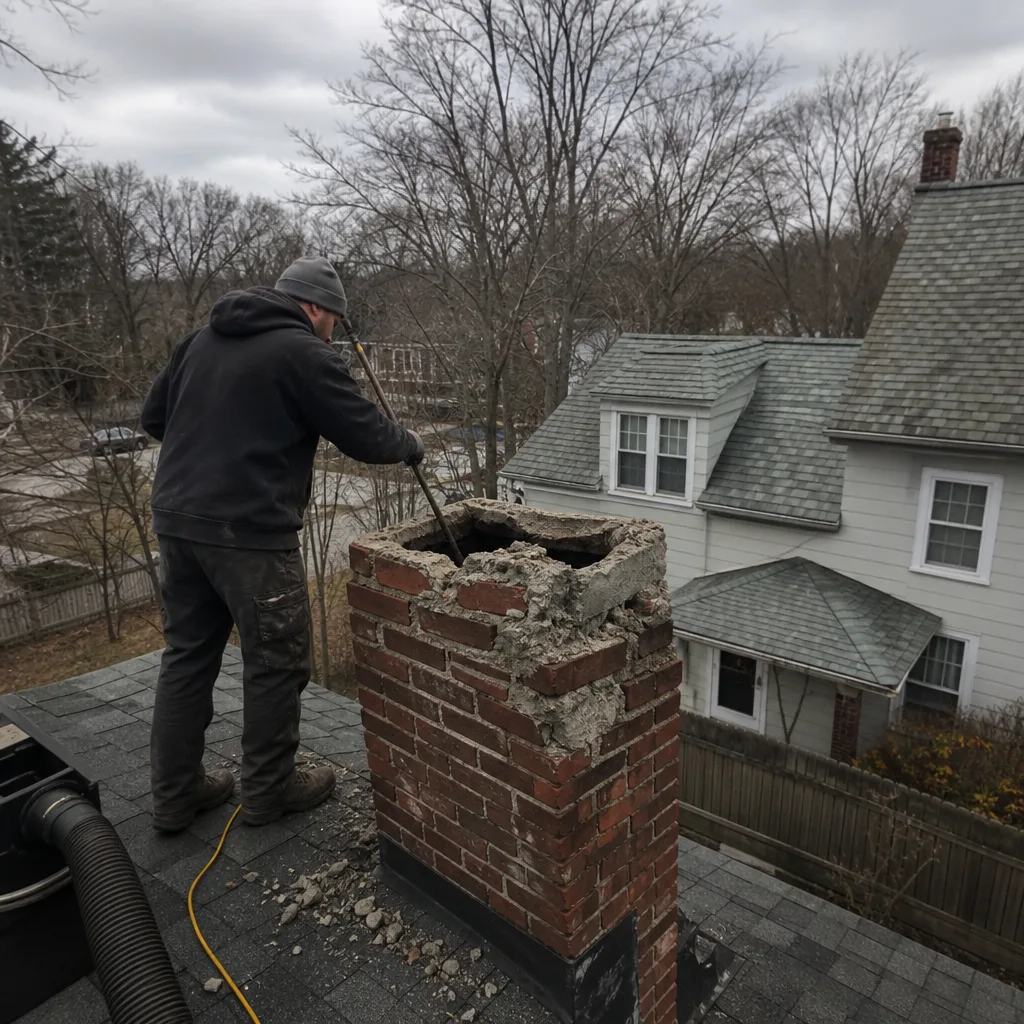 Before
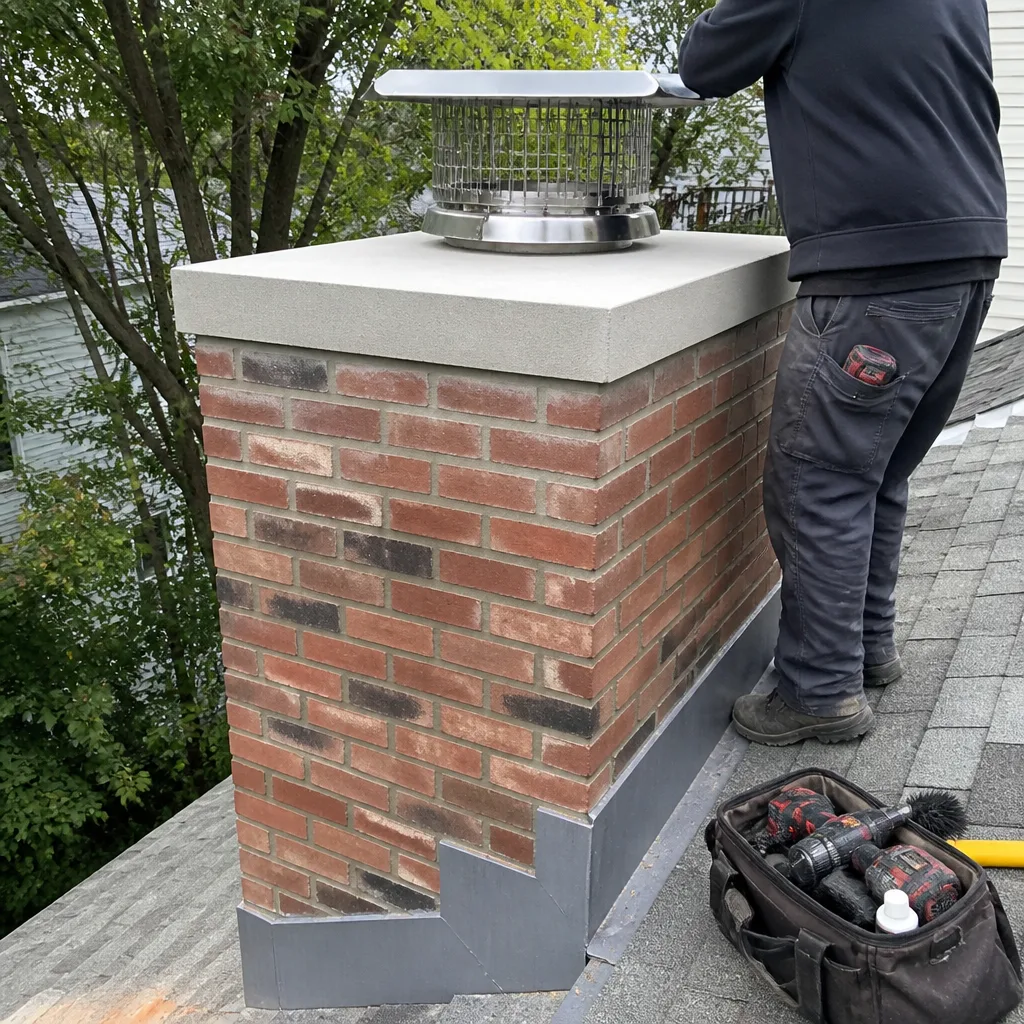 After
AfterChimney Cleaning & Sweep Maintenance Checklist for Newton Homeowners
The thing that sends most Newton homeowners to the phone in a panic isn’t a dramatic chimney fire. It’s a slow problem they could have caught six months earlier if they’d known exactly where to look. After 42 years of service calls across Newton, from the Victorian triple-deckers near Newton Centre to the mid-century ranches in Oak Hill, we’ve learned that chimneys fail predictably. The freeze-thaw cycles of Middlesex County, the age of Newton’s housing stock, and the specific appliances homeowners rely on create a pattern of wear that a generic checklist misses entirely. This guide is built from what we’ve actually found in Newton flues, not a template printed for any ZIP code.
Quick Answer
Newton homeowners should inspect their chimney exterior monthly from March through November, schedule our Chimney Cleaning & Sweep services and a Level-2 camera inspection every September before the first sustained cold snap, and perform interior checks after the first week of regular heating use. Annual maintenance prevents the three most common Newton failures: crown deterioration from freeze-thaw cycling, liner damage from condensation in high-efficiency appliances, and draft reversal caused by pressure imbalances in tightly sealed homes. Document everything with dated photos to track changes year over year.
Table of Contents
- The Newton Climate Calendar: Month-by-Month Maintenance Tasks
- Exterior Ground Check: What You Can Spot in Ten Minutes
- Interior Warning Signs Newton Homeowners Routinely Miss
- Cap and Crown Condition: Your First Defense Against Winter Damage
- Appliance-Specific Maintenance for Newton’s Common Heating Types
- How to Document Your Chimney Condition Year Over Year
- Common Mistakes to Avoid
- When to Call a Professional
- Frequently Asked Questions
The Newton Climate Calendar: Month-by-Month Maintenance Tasks
Newton’s heating season runs longer than many homeowners assume. The first sustained fire typically lights in mid-October, and we see stoves and fireplaces running into April during stubborn springs. Our freeze-thaw cycle, driven by Middlesex County’s temperature swings, does more damage to masonry than sustained cold ever could. Water enters hairline cracks, expands at 32 degrees, and widens those cracks with every cycle. Newton averages 40-50 freeze-thaw events annually, and each one is a small hammer blow to your chimney’s crown and mortar joints.
Here’s how we calendar maintenance based on what actually fails and when:
March-April: Post-Season Assessment
After your final fires, inspect the firebox for white or gray powdery residue. This is efflorescence, and in Newton it signals moisture migration through the masonry that accelerated during winter. Check the damper for rust or stiffness before humidity rises in late spring. If the damper won’t seat fully, summer air conditioning will draw conditioned air up the flue, wasting money and inviting condensation.
May-June: Exterior Masonry Evaluation
This is the ideal window for crown repair and tuckpointing. Temperatures are moderate, mortar cures properly, and any water intrusion from winter is fully visible. Walk your property line and sight up the chimney from multiple angles. Look for missing mortar, spalled brick faces, and any lean or separation from the house wall.
July-August: Cap, Crown, and Flashing Detail Work
Schedule any needed repairs now. The chimney repair in Newton calendar fills by late August as homeowners realize winter is approaching. If your crown is cracked or your cap is missing, water has unrestricted access for the next four months of potential storms.
September: Professional Sweep and Inspection
Book your chimney cleaning and sweep in Newton for early September, before the first cold snap creates demand surges. A Level-2 camera inspection now catches problems while they’re still repairable, not after they’ve caused interior damage. This timing also lets you address any needed work before burning season begins.
October: First-Fire Checklist
After the professional sweep, verify the damper opens fully and seats closed. Test your smoke and CO detectors with fresh batteries. Open a window slightly for the first fire to establish draft before the house is fully sealed for winter.
November-February: Monitoring Phase
Check monthly for new exterior cracks, interior odors, or draft issues. The first cold week of sustained heating is when hidden problems reveal themselves. Note any changes and photograph them for your records.
Exterior Ground Check: What You Can Spot in Ten Minutes
You do not need a ladder or special equipment to identify most serious chimney problems. What you need is a systematic eye and the knowledge of what each pattern means. In Newton, where many chimneys serve homes built before 1960, the exterior tells a story that predates your ownership.
Step 1: The 360-Degree Walkaround
Walk the full perimeter of your property, sighting the chimney from each accessible angle. Note the chimney’s plumb. Any visible lean, even slight, indicates foundation settlement or deteriorated mortar joints that have allowed the structure to shift. In Newton’s clay-heavy soils, particularly in the lower-lying areas near the Charles River watershed, freeze-thaw ground movement accelerates this process.
Step 2: Crown and Cap Inspection
Using binoculars or a zoomed phone camera, examine the crown (the concrete or mortar slab topping the chimney) and the cap (the metal cover above the flue opening). The crown should slope away from the flue tile with no ponding areas. Cracks wider than a credit card edge will admit water. Missing or rusted caps are an open door for rain, animals, and debris.
Step 3: Brick and Mortar Condition
Spalling, where brick faces flake or pop off, is freeze-thaw damage in progress. In Newton, we see this most on south- and west-facing exposures where daily temperature swings are most extreme. Tuckpointing (grinding out failed mortar and replacing it) is needed when mortar joints recede more than half an inch from the brick face.
Step 4: Flashing and Counterflashing
The metal where chimney meets roof is a common leak point. Look for lifted edges, rust streaks on the roof below, or any gap you can slip a fingernail into. Newton’s mature tree canopy drops debris that traps moisture against flashing, accelerating corrosion.
Step 5: Staining Patterns
White or gray streaks below the crown indicate water runoff carrying dissolved salts. Rust stains suggest metal components (flashing, cap, or interior liner) are corroding. Dark staining near the top often means creosote is seeping through cracked flue tiles, a serious condition requiring immediate professional evaluation.
Interior Warning Signs Newton Homeowners Routinely Miss
The most expensive chimney repairs we perform in Newton started as interior symptoms that homeowners rationalized away. A faint odor on humid days. A draft that “just needs a minute” on startup. White haze that wipes off with a finger. Each of these has a specific mechanical cause, and each worsens predictably if ignored.
Draft Problems in the First Cold Week
Newton homes are tighter than ever. Replacement windows, spray-foam insulation, and weatherstripping eliminate the infiltration that older houses relied on for combustion air. The result: negative pressure. When you run kitchen exhaust, bathroom fans, or the dryer, your house becomes a slight vacuum. The path of least resistance for makeup air is often down the chimney, reversing the draft and pushing smoke into living spaces.
The first sustained cold week reveals this because the temperature differential between flue and house is greatest, and because homeowners seal windows that were cracked open in fall. If your fireplace smokes on startup but clears after several minutes, or if you smell smoke in upstairs rooms while the fire burns, you have a pressure imbalance, not a dirty flue.
Diagnostic steps:
- Open a window nearest the fireplace six inches before lighting. If draft improves immediately, pressure imbalance is confirmed.
- Check that your damper opens fully and that no debris blocks the flue opening.
- Verify that furnace and water heater vents are not competing for the same air supply.
- If the home was built or significantly renovated after 1990, consider whether a fresh-air intake was omitted during energy upgrades.
White Haze on Firebox Walls
Efflorescence inside the firebox means water is migrating through the masonry from the exterior. In Newton, this typically originates from a failed crown or deteriorated mortar joints that allow water to saturate the chimney structure. The white deposit is dissolved mineral salts left behind as water evaporates. It is not harmless cosmetic discoloration. It is evidence of ongoing water damage that will eventually destroy mortar bonds and spall brick faces.
Odor Type as Diagnostic Tool
Different problems produce different smells, and the distinction matters for both safety and repair scope:
- Asphalt or tar smell: Creosote buildup, especially in wood-burning systems. Requires sweeping before next use. In Newton, where many homeowners burn seasoned hardwood from local sources, creosote accumulates faster than with dry western softwoods.
- Musty or earthy smell: Water intrusion and possible mold growth in the chimney structure. Indicates crown, cap, or flashing failure. Often strongest on humid summer days when evaporation pulls moisture and spores into the house.
- Sharp, acrid chemical smell: Degraded chimney liner or flue gases leaking into the structure. This is a carbon monoxide risk. Stop using the appliance and call for inspection immediately.
- Dead-animal or sewage smell: Blocked flue or missing cap allowing animal entry, or positive pressure forcing sewer gas through dry traps. Both require immediate attention.
Cap and Crown Condition: Your First Defense Against Winter Damage
The single check that prevents the most common Newton repair call is also the simplest: the condition of your chimney cap and crown. We replace more crowns in Newton than in surrounding communities with similar housing age, and the reason is the freeze-thaw cycle acting on crowns that were never properly constructed or have simply aged past their service life.
What the Crown Should Look Like
A proper crown is poured concrete, minimum two inches thick at the edges and sloped away from the flue tile. It should overhang the brick by at least three-quarters of an inch with a drip edge underneath to shed water clear of the masonry wall. Many Newton chimneys, especially those built during the 1950s-1970s construction boom, were topped with mortar wash instead of concrete. Mortar wash cracks within years and offers no structural protection.
What the Cap Should Do
The cap covers the flue opening while allowing smoke and gases to exit through screened sides. It prevents rain entry, animal nesting, and downdrafts from wind. In Newton’s mature neighborhoods, squirrel and raccoon intrusion through uncapped flues is common from October through December as animals seek winter shelter. A quality cap from Olympia Chimney or Famco includes proper mesh sizing that blocks animals without clogging with creosote.
Failure Modes We See in Newton
Crown cracks typically start at the flue tile interface, where differential expansion between masonry and metal or clay creates stress. Once water enters, freeze-thaw cycling widens cracks exponentially. By the second winter, water reaches the interior structure. By the third, you’re facing liner damage and interior ceiling stains.
Cap failure is usually simpler: rusted or missing units, or DIY installations with improper clearances that cause drafting problems. We install Gelco and Copperfield caps with proper spark arrestor mesh and adequate flue clearance for the appliance served.
The September inspection window is critical because crown repair requires dry conditions and moderate temperatures for proper curing. Once nighttime temperatures drop below 40 degrees consistently, the repair season closes until spring.
Appliance-Specific Maintenance for Newton’s Common Heating Types
Newton’s housing stock spans nearly 150 years of construction, and the heating appliances we encounter reflect that range. Each type has specific maintenance needs that a generic checklist ignores.
Open Masonry Fireplaces (Pre-1940s and High-End Construction)
These are the least efficient and most maintenance-intensive systems. The large flue required for open combustion draws tremendous heated air up the chimney even when not in use. Annual sweeping is non-negotiable; creosote buildup in an open fireplace is visible and rapid. Check the smoke chamber (the area above the damper) for soot glaze, which can ignite and cause a chimney fire that damages the flue liner. Our Level-2 camera inspection examines this area that a standard sweep cannot reach.
Insert Fireplaces (1970s-1990s Retrofits)
Inserts installed into existing masonry fireplaces require a full stainless liner from top to bottom. The connection between insert and liner is the failure point we find most often in Newton. The flex liner can separate from the insert collar, allowing exhaust into the chimney structure rather than up the flue. This is a carbon monoxide hazard that produces no visible symptom until a camera inspection reveals it.
Inserts also create more creosote than their efficiency ratings suggest, because they rarely achieve the high combustion temperatures of free-standing stoves. Annual sweeping and connection inspection are essential.
Gas Log Sets and Direct-Vent Fireplaces
These appliances produce minimal creosote but create their own maintenance needs. The ceramic logs degrade and can block proper flame pattern, causing soot production where none existed before. The millivolt pilot and thermocouple systems fail predictably after 5-7 years. Venting systems, particularly direct-vent wall terminals, can be blocked by vegetation or snow accumulation. For fireplace services in Newton including gas system diagnostics, we test combustion efficiency and venting safety as part of our seasonal tune-up.
Wood Stoves (Free-Standing)
p>Free-standing stoves in Newton, common in the 1970s energy-crisis era and enjoying renewed popularity, require the most knowledgeable maintenance. The connector pipe from stove to chimney must be proper galvanized or stainless steel, never galvanized dryer duct or other improvised material. Clearances to combustibles are specified by the stove manufacturer and are not negotiable. We document clearances with photos during every inspection.
Catalytic combustors, found in EPA-certified stoves, degrade after 2-4 seasons of use. A failed combustor reduces efficiency and increases creosote production dramatically. Replacement is straightforward but requires the correct part for the specific stove model.
High-Efficiency Gas Furnaces and Boilers
Modern condensing appliances vent through plastic pipe, not masonry chimneys. But many Newton homes still have mid-efficiency units venting into existing flues, or have abandoned chimneys that now vent only water heaters. The latter is a critical problem: an oversized masonry flue for a single low-BTU water heater cannot maintain adequate draft. Condensation forms, destroying clay flue tiles and mortar joints from the inside. Liner installation or conversion to direct vent is typically required.
How to Document Your Chimney Condition Year Over Year
The most powerful protection against inflated repair quotes is your own documented history. We have seen Newton homeowners quoted thousands for “urgent” liner replacement when their own photos from two years prior showed identical conditions that a previous sweep had deemed acceptable. Documentation eliminates this manipulation.
Your Annual Photo Set
Take these photos in consistent lighting and from consistent angles, dated and stored in a dedicated folder:
- Exterior wide shot: Full chimney from ground level, showing relationship to roofline and any lean or staining.
- Crown close-up: Zoomed view of the crown surface and flue tile interface, taken with the same camera setting each year.
- Cap detail: Condition of the cap, mesh, and attachment method.
- Flashing intersection: Where chimney meets roof, both sides if accessible from ground or second-story window.
- Firebox interior: Full view of the firebox walls, damper, and smoke chamber entrance.
- Hearth and surround: Condition of the firebrick, any hearth extension, and nearby flooring.
The Written Log
After each professional service, request and keep: the inspection report, any photos the technician took, and a summary of recommended work with priority ranking. At Hearthstone, our reports include dated photos with annotations and a plain-English verdict: what needs attention now, what can wait, and what should be monitored. For more guides & resources, visit our blog. If a future contractor recommends work that contradicts this record, you have grounds for a second opinion.
Tracking Changes Over Time
Compare photos annually, not just for worsening conditions but for new conditions. A crack that was hairline in 2022 and pencil-width in 2024 is actively deteriorating and needs intervention. A stain that has not changed in five years may be historical, not active. The distinction saves unnecessary expense.
We offer free second opinions on any written estimate in Newton. Bring your documentation, and we’ll review it against what we find. The number on our estimate is the number on the invoice, with no surprises.
Common Mistakes to Avoid
- Waiting for visible smoke or water damage before acting. By the time you see interior evidence, the structural damage is advanced. Newton’s freeze-thaw cycle accelerates hidden deterioration. The $200 crown repair ignored in September becomes the $3,000 rebuild required by March.
- Using the wrong fuel or burning improperly seasoned wood. Wood burned in Newton should be split, stacked, and covered for minimum 12 months. Green or damp wood produces acidic creosote that corrodes stainless liners and degrades mortar. Never burn pressure-treated lumber, painted wood, or household trash; the combustion byproducts destroy flue liners and create toxic hazards.
- Assuming gas appliances need no maintenance. Gas burns cleaner than wood but produces corrosive condensation in marginal draft conditions. The venting system, burner alignment, and safety controls all require periodic verification. A gas fireplace that “works fine” can still be producing carbon monoxide at dangerous levels if combustion is incomplete.
- Hiring based on the lowest quote without verifying scope. In Newton’s competitive market, some operators bid sweeping alone and discover “urgent” repairs once they’re on site. Verify what the quoted price includes: sweep, inspection, camera evaluation, and written report. Our $89 Seasonal Tune-Up includes all of these, with upfront pricing for any needed repairs.
- Ignoring neighborhood-specific risks. Homes near the Charles River floodplain or in low-lying areas of Newton experience higher ambient humidity, accelerating metal component corrosion. Mature canopy neighborhoods have more leaf debris and animal activity. Your maintenance frequency should reflect your specific location, not a generic annual recommendation.
- DIY repairs on critical safety components. Replacing a chimney cap is within capable homeowner reach. Repairing a crown, replacing a liner, or modifying venting is not. These systems operate under temperature extremes and gas pressures that punish improper materials or methods. The Hearthstone Chimney Co. home page details our background-checked, uniformed technician standards for work we stand behind.
- Failing to verify contractor credentials. Massachusetts requires chimney sweeps to hold a Construction Supervisor License for structural work and proper liability insurance. Ask for proof. We carry full coverage and provide documentation on request. A legitimate contractor has nothing to hide.
When to Call a Professional
Some conditions require immediate professional evaluation, not continued monitoring. Call for inspection if you experience: smoke or odors entering living spaces during appliance use; visible cracks in the flue liner or firebox; rust or water staining on interior ceilings or walls near the chimney; a chimney fire, however brief, characterized by loud cracking or roaring from the flue; or any sudden change in draft performance after weather events or nearby construction.
Carbon monoxide symptoms, headache, nausea, or dizziness while heating appliances operate, demand emergency response. Evacuate and call 911, then schedule chimney inspection before resuming use.
For routine maintenance, September booking ensures availability before the Newton heating season begins. Hearthstone Chimney Co. offers free estimates in Newton. Call (857) 754-5607 to schedule, or to request a second opinion on any written estimate you’ve received. A live person answers every call, 24 hours a day, every day.
Frequently Asked Questions
A professional chimney sweep and Level-2 inspection in Newton typically ranges from $250 to $450, depending on appliance type, accessibility, and whether camera documentation is included. Hearthstone’s $89 Seasonal Tune-Up includes full sweep, inspection, and photo report for qualifying systems during our preseason booking window. Call (857) 754-5607 for exact pricing on your specific setup - estimates are free.
The National Fire Protection Association recommends annual inspection for all chimney systems, with sweeping frequency determined by use and fuel type. In Newton, wood-burning systems used as primary heat sources typically require annual sweeping; occasional-use fireplaces may extend to every two years if inspection confirms minimal creosote accumulation. Gas systems require annual safety inspection, though sweeping is rarely needed. The critical factor is not the calendar but the condition verified by camera inspection.
You need a new liner only if inspection confirms the existing liner is damaged, improperly sized, or absent. In Newton, we find three legitimate scenarios: clay tile liners cracked by chimney fires or freeze-thaw damage; unlined chimneys serving modern appliances that require proper venting; and liners improperly sized for the appliance they serve, causing condensation and draft failure. We document liner condition with photos you can see, explain the specific failure mode in plain English, and clearly state when work can safely wait. Nothing is recommended without evidence you can evaluate yourself.
Skipped maintenance leads to predictable, expensive, and sometimes dangerous outcomes. Creosote accumulation increases chimney fire risk, with temperatures exceeding 2,000 degrees capable of cracking flue tiles and igniting adjacent framing. Water intrusion destroys mortar joints and spalls brick, eventually requiring partial or full rebuild. Corroded or separated liners allow exhaust gases, including carbon monoxide, into living spaces. In Newton’s housing market, deferred chimney maintenance also reduces property value and can derail real estate transactions when inspection reveals neglected conditions.
Cold-weather draft problems in Newton homes typically result from the interaction of three factors: greater temperature differential between heated house and cold flue, tighter building envelopes that reduce available combustion air, and competing exhaust appliances that create negative pressure. The first cold week of sustained heating is when these factors converge. Solutions range from simple (crack a window on startup) to structural (install a dedicated combustion air supply or correct venting configuration). A pressure test and draft measurement during our inspection identifies the specific cause in your home.
Homeowners can and should perform the monthly ground-level exterior checks and interior symptom monitoring described in this guide. What you cannot do is evaluate the flue interior, smoke chamber, or liner condition without specialized camera equipment and training. The NFPA Level-2 inspection, required for real estate transactions and recommended for all systems annually, includes examination of these inaccessible areas. In 42 years of Newton service calls, we have never seen homeowner self-inspection replace the value of professional camera evaluation. The two are complementary, not alternative.
The Bottom Line
Chimney maintenance in Newton is not about following a generic checklist. It is about understanding how our specific climate, housing stock, and appliance types create predictable failure patterns, then calibrating your attention to catch those patterns early. The freeze-thaw cycle, the pressure imbalances in tightened homes, and the range of heating appliances from 19th-century fireplaces to modern condensing boilers each demand specific knowledge.
Document what you observe. Schedule professional evaluation before problems become emergencies. And work with a company that explains what it finds, shows you the evidence, and stands behind its work without argument. Done right, and we stand behind it. That’s the Keystone Standard we’ve operated by since 1984.
Ready to schedule your inspection or have questions about something you’ve observed? Call Hearthstone Chimney Co. at (857) 754-5607. A live person answers every call, 24 hours a day, every day. Estimates are free, and the number we quote is the number on your invoice.
Written by Russell Haines, Owner at Hearthstone Chimney Co., serving Newton since 2014.