
Last updated September 10, 2026
Level 1 sweep and inspection to the NFPA 211 annual standard - flue, crown, cap, and flashing checked and photographed
Chimney sweep logs do not sweep chimneys. They loosen some creosote - which then falls where a brush and vacuum still have to collect it.
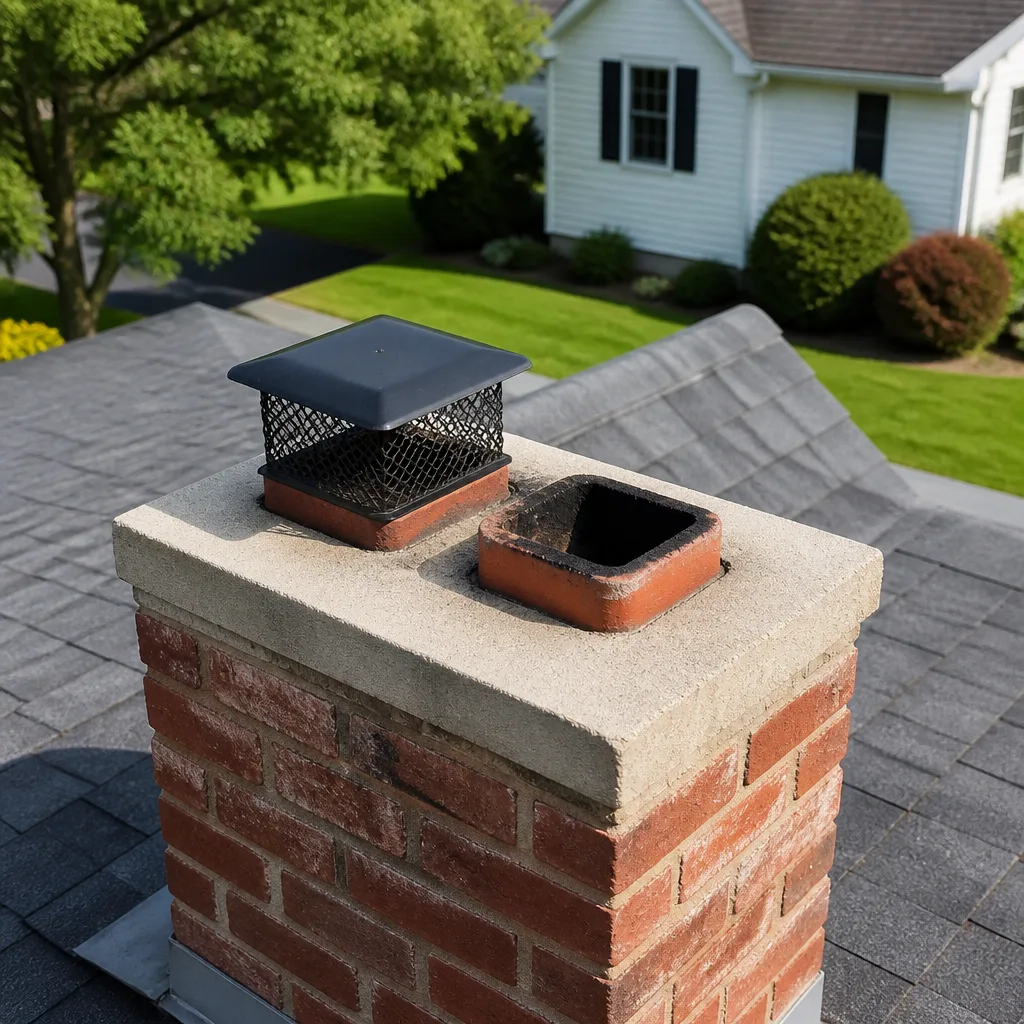
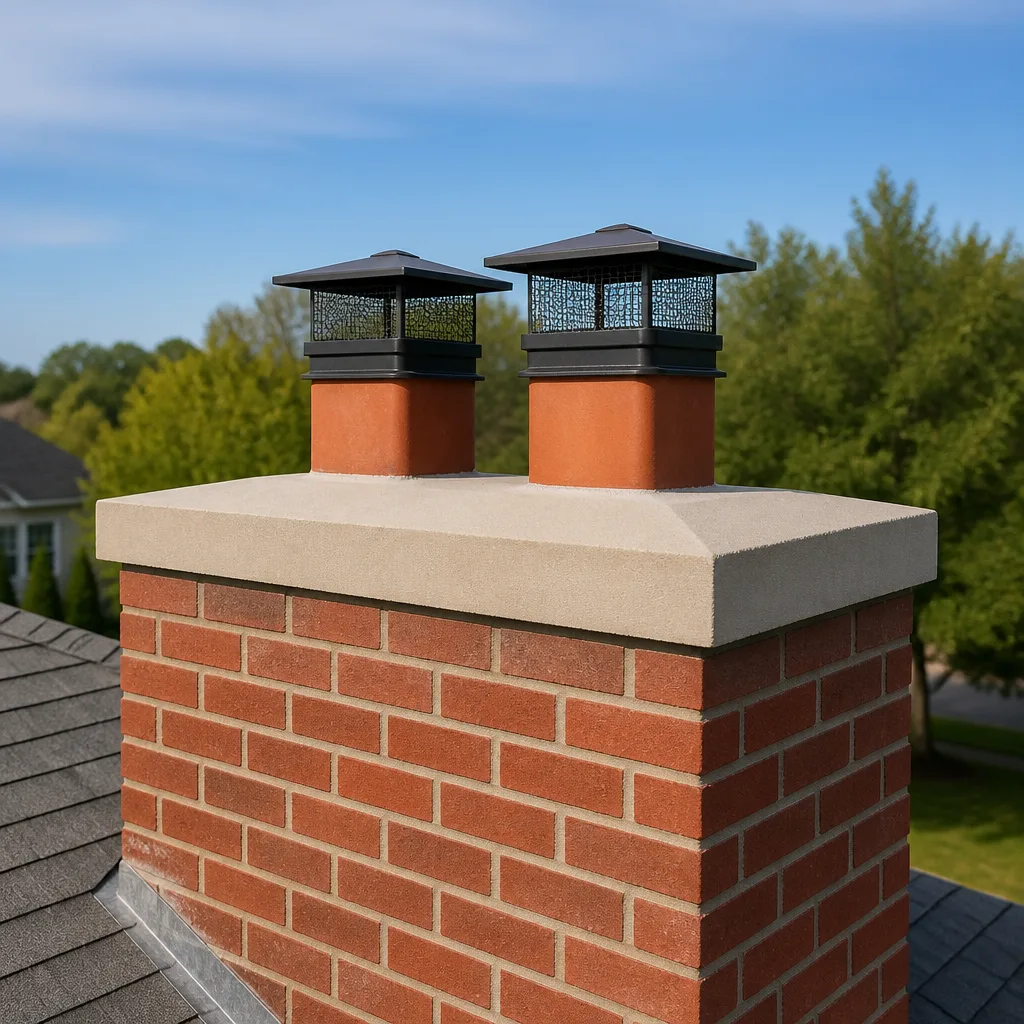
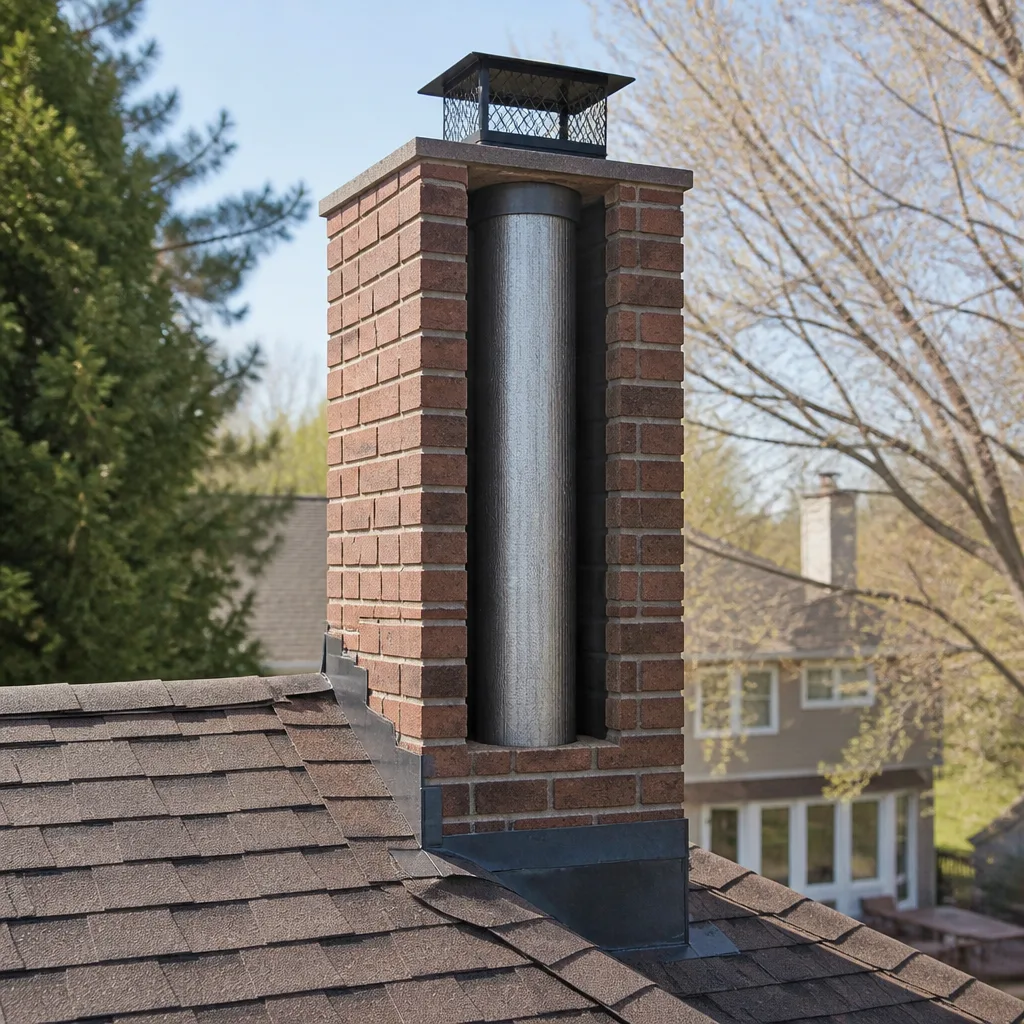
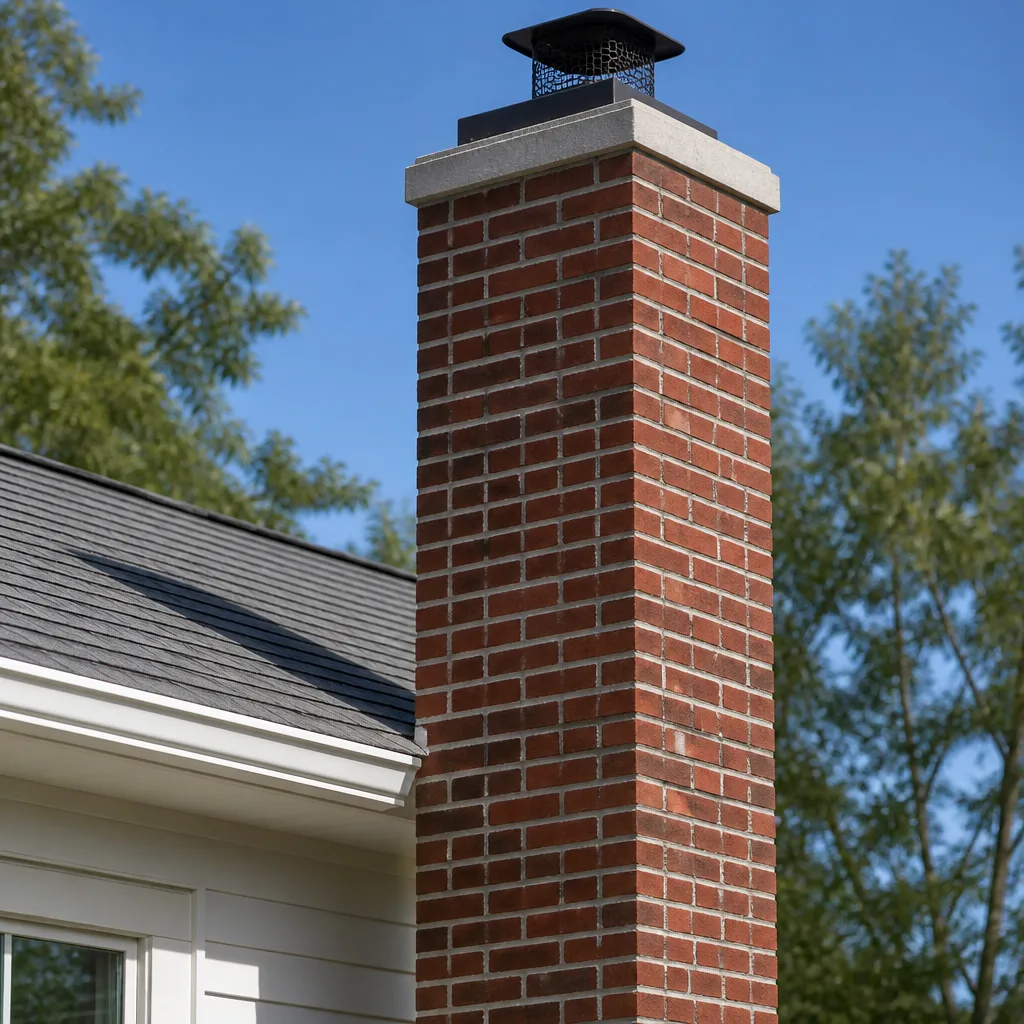
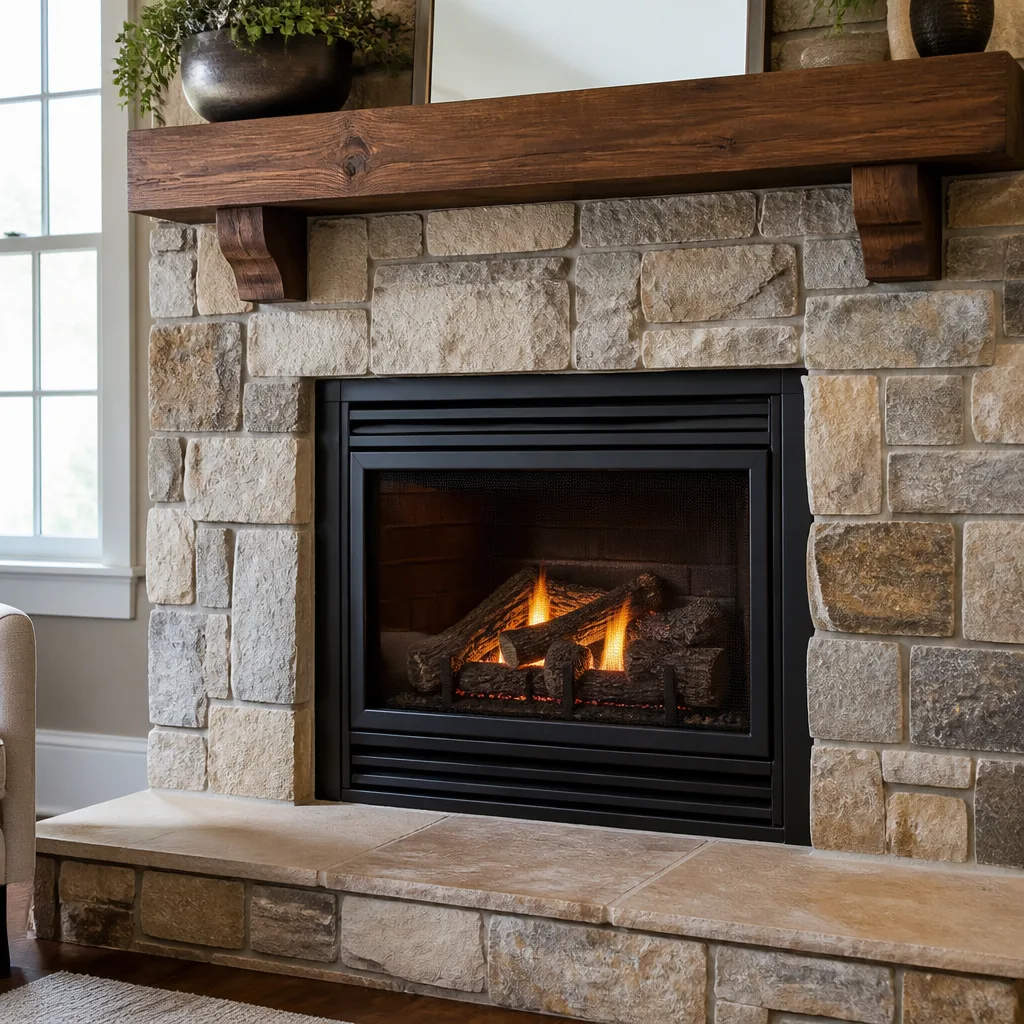
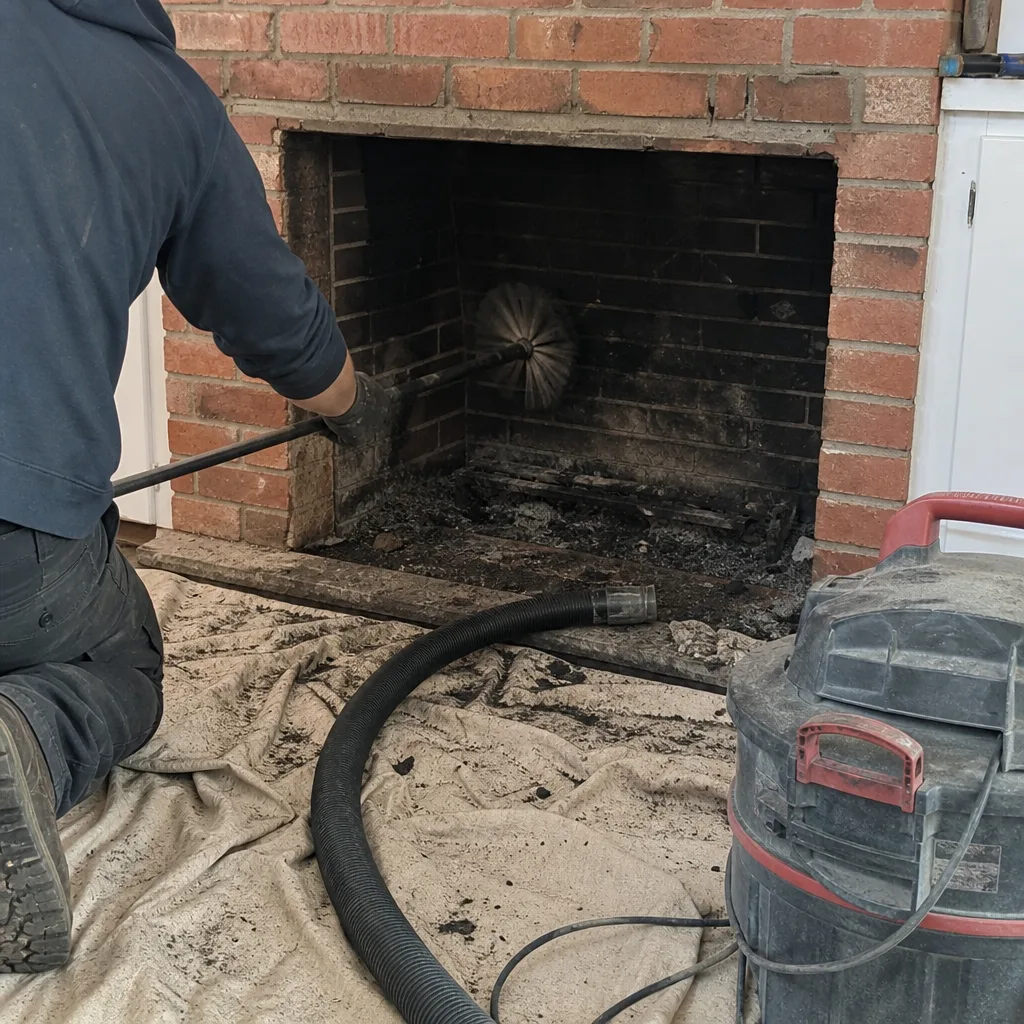 Before
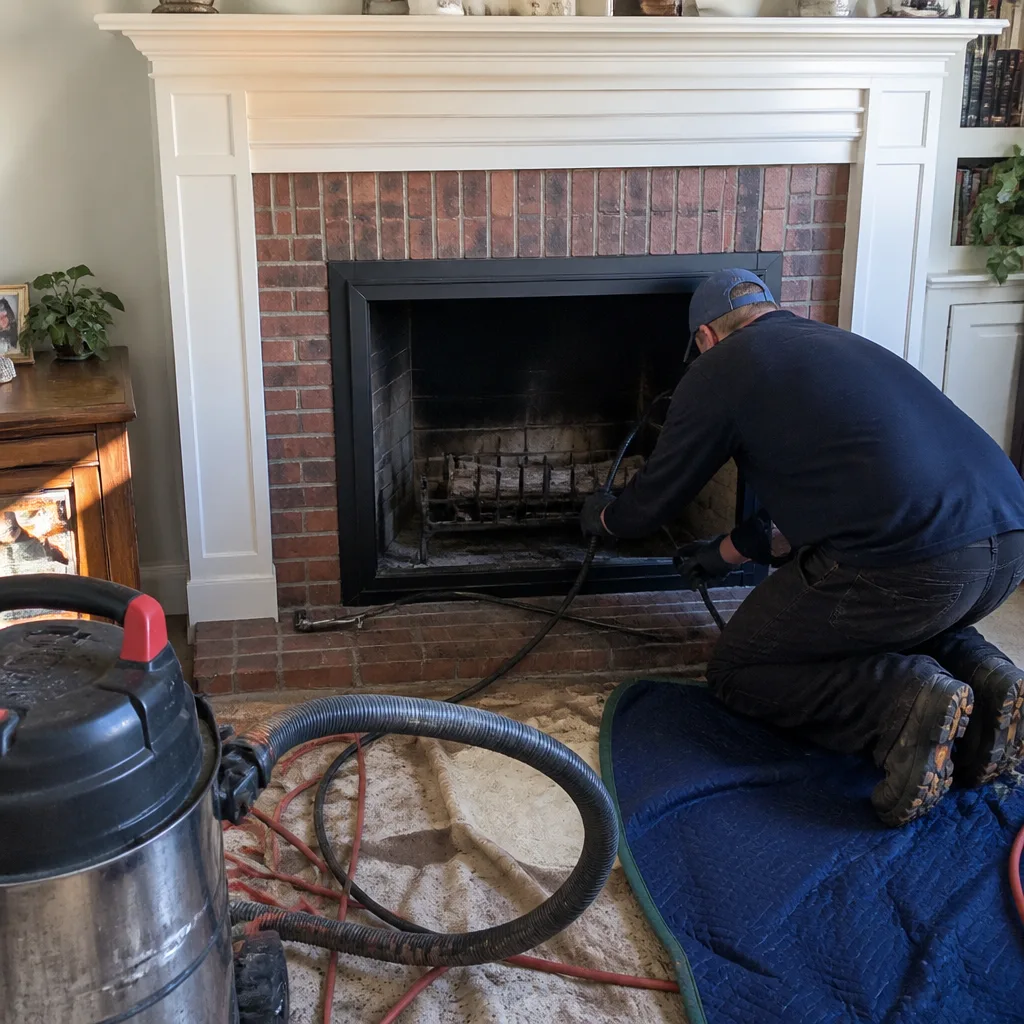 After
After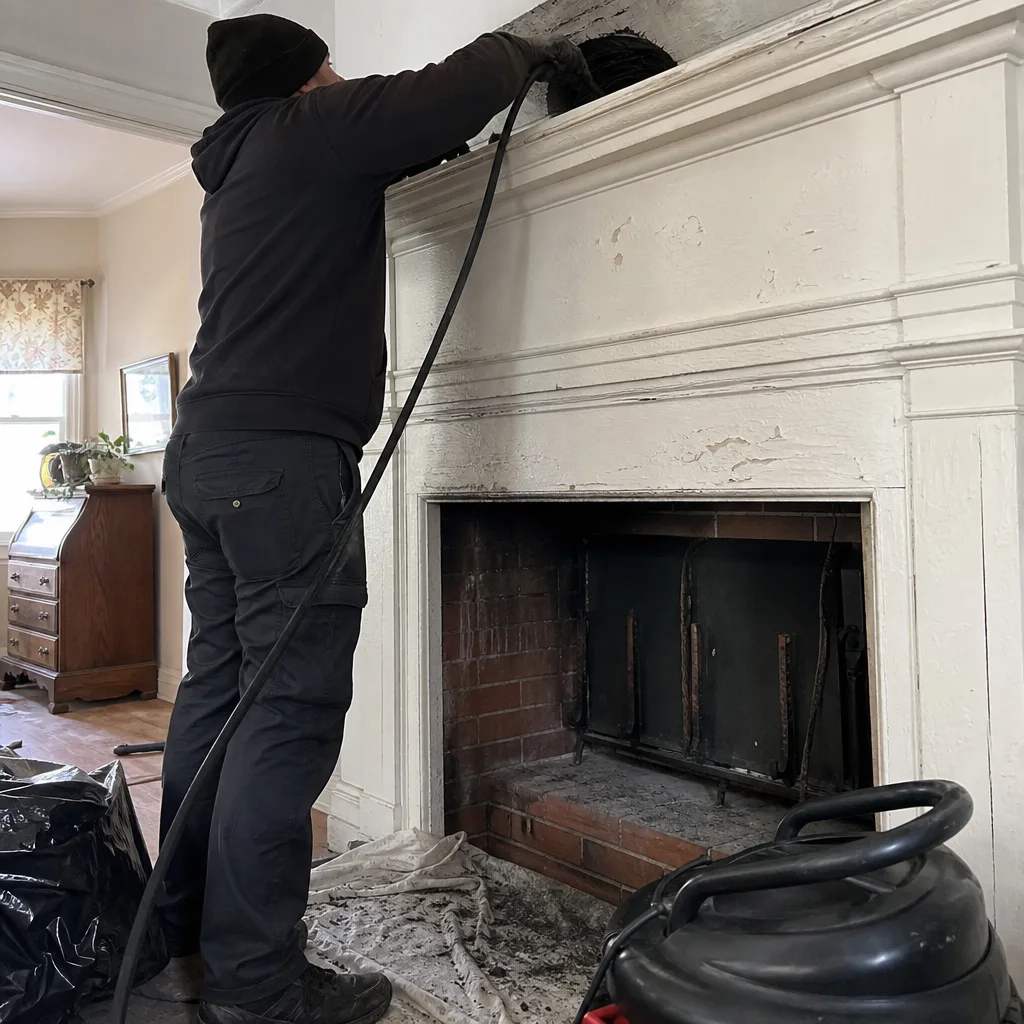 Before
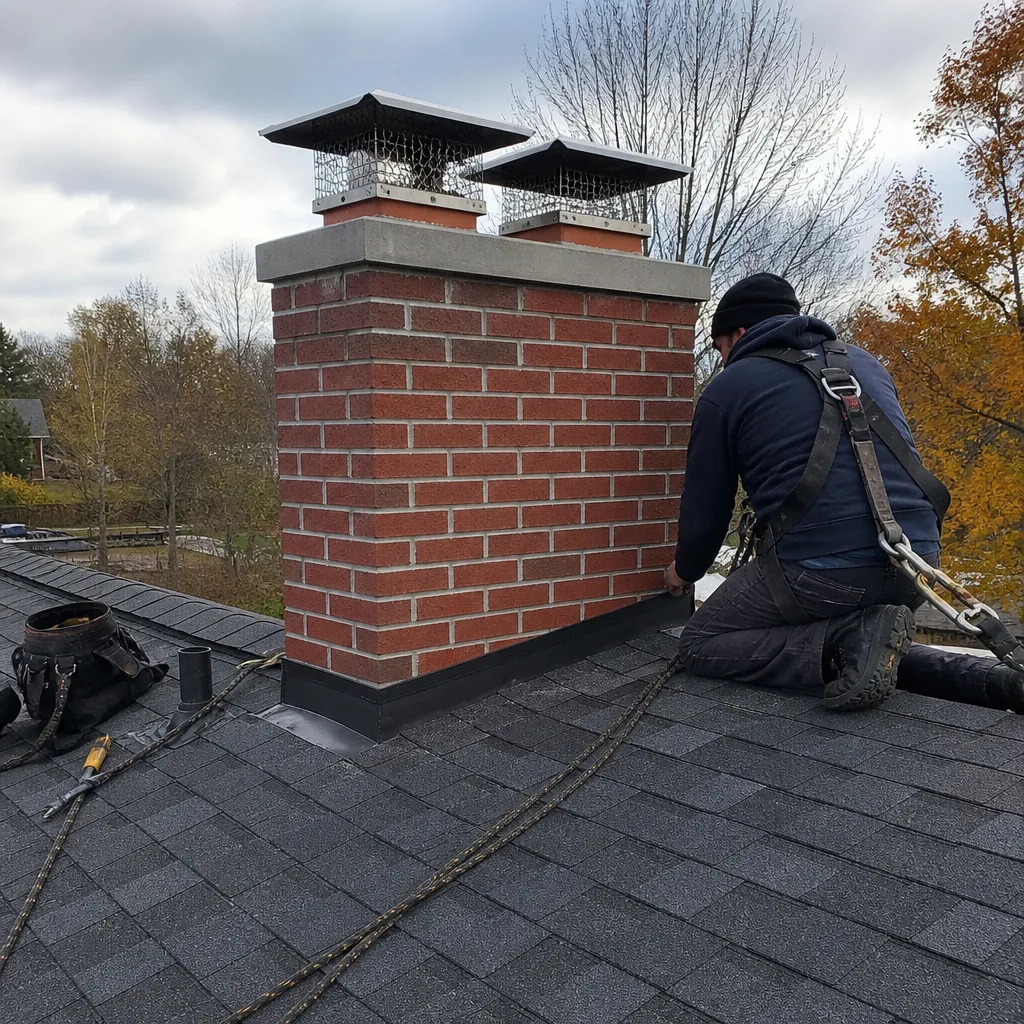 After
After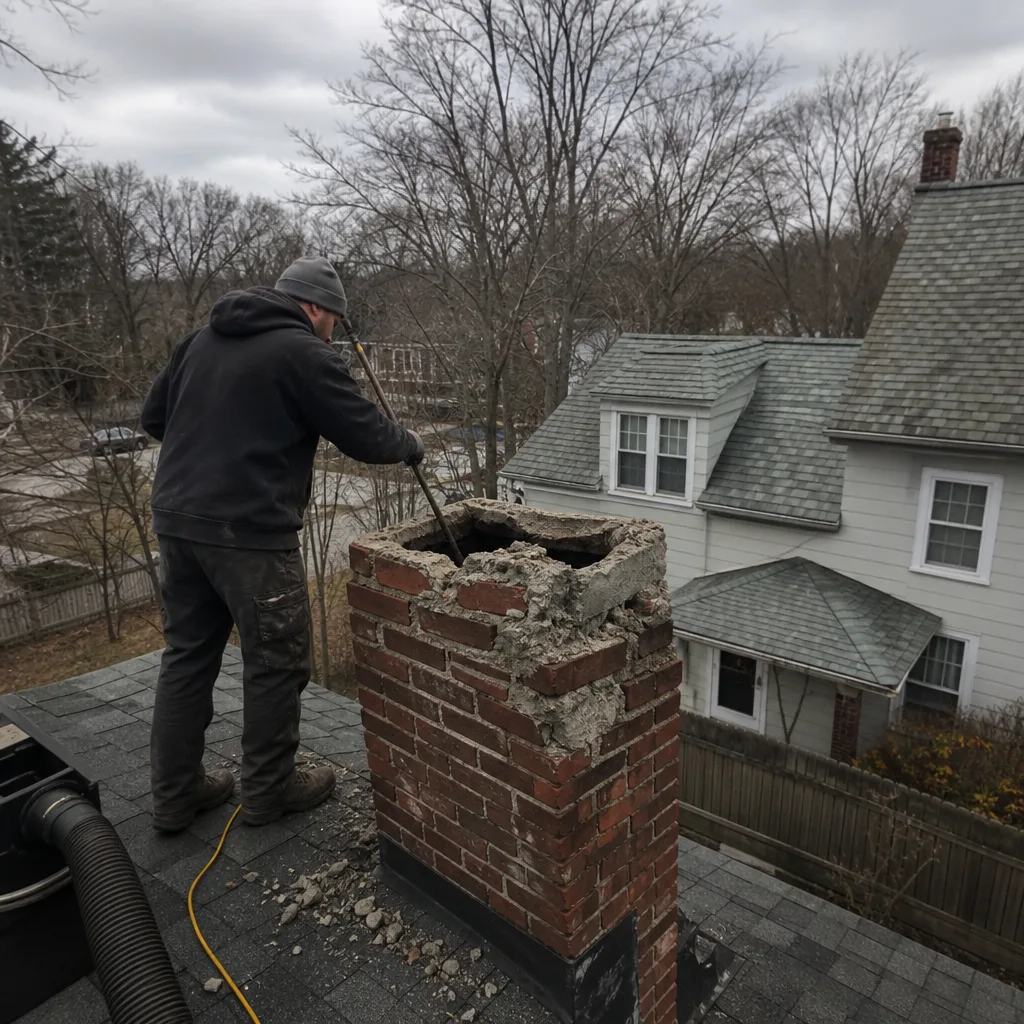 Before
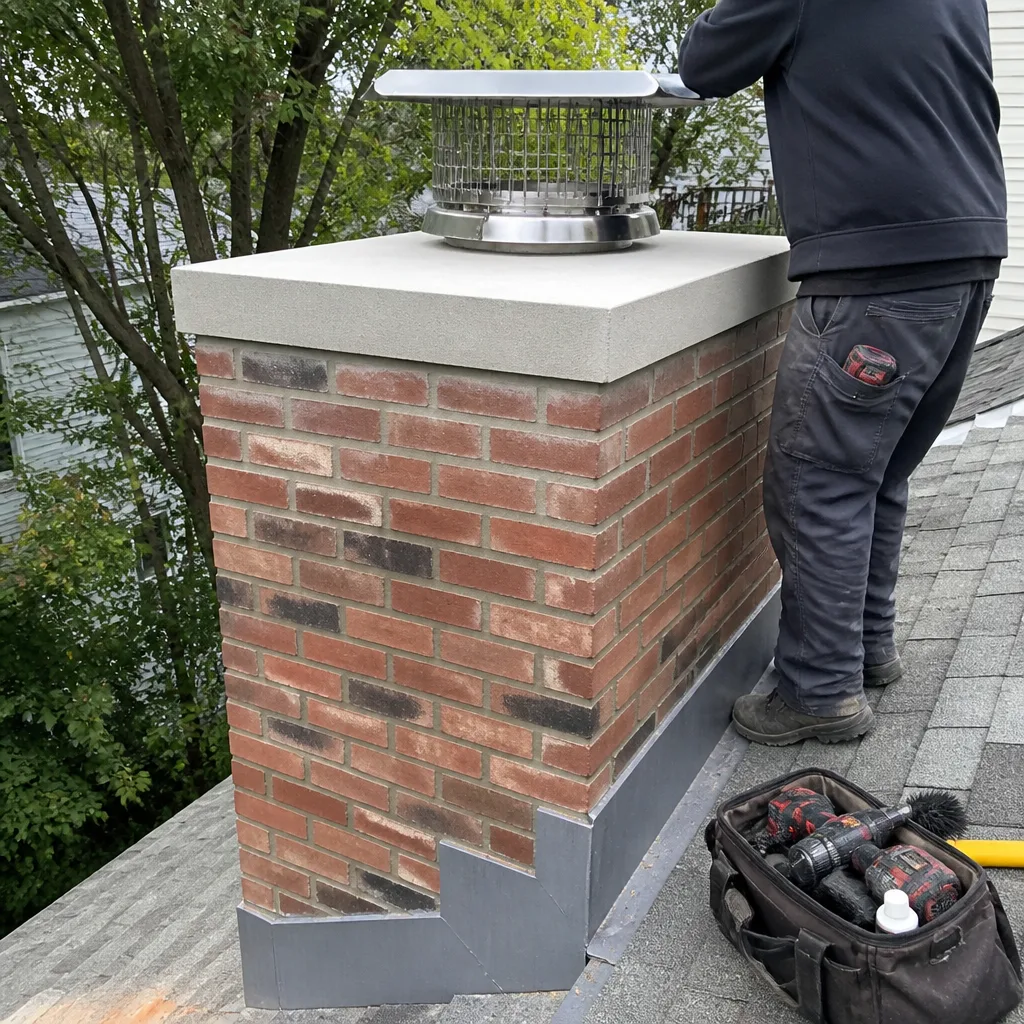 After
AfterThe Complete Guide to Chimney Cleaning in Newton
More than 60% of Newton’s housing was built before 1970. That means most chimneys in this city were designed around fuels, appliances, and building codes that no longer exist. A standard brush-and-vacuum cleaning might clear surface soot, but it will not address the layered problems hiding inside a 1920s colonial flue or a 1950s ranch chimney that once vented an oil furnace and now handles natural gas. In this guide, we will explain what chimney cleaning actually involves in Newton’s real conditions: the pre-liner brick chimneys common in Waban and Newton Centre, the sulfur deposits left by oil-to-gas conversions, and why a legitimate cleaning always starts with a camera inspection, not ends with one.
Quick Answer
Chimney cleaning in Newton typically costs between $200 and $400 for a standard sweep with Level I inspection, or $350 to $550 when a Level II camera inspection is needed. Most cleanings take 60 to 90 minutes and should be scheduled annually for wood-burning systems and every one to two years for gas. In Newton’s older housing stock, we strongly recommend the Level II inspection for any chimney over 40 years old or one that has changed fuel types; our step-by-step guide to hiring a chimney cleaning contractor in Newton explains how to verify this standard is actually met.
Table of Contents
- Why Newton’s Older Chimneys Need Specialized Cleaning
- What Professional Chimney Cleaning Actually Involves
- Level I vs. Level II Inspections: What Newton Homeowners Need to Know
- Creosote Stages and Why Stage 3 Changes Everything
- The Hidden Problem: Oil-to-Gas Conversions in Newton
- What a Legitimate Cleaning Report Looks Like
- Chimney Cleaning Costs in Newton: A Straightforward Breakdown
- How Often to Clean Your Chimney in Newton
Why Newton’s Older Chimneys Need Specialized Cleaning
Newton’s housing stock is not like newer suburban markets. Walk through Newtonville, Nonantum, or Chestnut Hill and you will find brick colonials from the 1890s, Tudor revivals from the 1920s, and postwar ranches from the 1950s. These homes were built before clay flue liners became standard, before NFPA 211 was widely adopted, and before anyone considered that a chimney might vent multiple fuel types across its lifespan.
We see the consequences in our work every week. A homeowner in Oak Hill calls because their “clean” chimney smells like asphalt every summer. The flue was brushed, but the sweep never ran a camera. If they had, they would have found a cracked crown letting water seep into unlined brick, where it mixes with residual soot and breeds bacteria that produce that sharp, chemical odor. Brushing does not fix this. It often makes it worse by dislodging material that then blocks airflow.
Newton’s climate compounds the issue. Freeze-thaw cycles here are severe. Water penetrates brick in October, expands when it freezes in January, and opens hairline cracks into gaps that vent combustion gases into wall cavities. A cleaning that does not assess masonry condition is incomplete by definition in this market.
The building codes tell part of the story. Massachusetts amended its fire code in 2014 to require Level II inspections upon property transfer, but many Newton homes have not changed hands in decades. Their chimneys have never been inspected to modern standards. When we arrive at a first cleaning in a home owned for thirty years, we routinely find conditions that would have been flagged years ago if anyone had looked.
Here is what distinguishes Newton’s chimney cleaning needs from DIY approaches and generic online advice:
- Pre-1960 chimneys often lack clay flue liners entirely, making direct assessment of brick condition essential
- Multiple fuel conversions - coal to oil, oil to gas, occasional back to wood - leave incompatible deposits layered in the flue
- Tall, narrow colonial flues (often 8×8 inches or smaller) restrict tool access and require specialized equipment
- Fieldstone chimneys in older Newton Highlands homes have mortar joints that deteriorate differently than brick
- Proximity to Boston’s urban heat island creates more rapid thermal cycling than suburban or rural markets
What Professional Chimney Cleaning Actually Involves
The image most homeowners have - a brush on a pole, some soot, maybe a drop cloth - describes about 15% of the actual work. Here is what a complete cleaning entails in Newton conditions, step by step.
- Exterior assessment. We examine the crown, cap, flashing, and visible brickwork from the roof or ladder before touching the interior. In Newton, we are looking for crown cracks, missing mortar, and deteriorated flashing where the chimney meets the roofline. This takes 10 to 15 minutes and prevents us from pressurizing a compromised system.
- Interior setup and protection. Drop cloths, HEPA vacuums, and sealed access to the work area. We treat your home like we would our own - Russell Haines started this company in 1984 on that principle, and it has not changed.
- Pre-cleaning camera run. Before any brush touches the flue, we send a camera up to document baseline conditions. This is non-negotiable for chimneys over 40 years old, which describes most of Newton. We are looking for liner condition, obstruction, creosote stage, and any signs of previous fire damage (glazed, puffed, or distorted mortar).
- Mechanical cleaning. The right tool for the deposit type. Stage 1 creosote responds to standard poly or wire brushes. Stage 2 requires rotary whips or chains. Stage 3 glazed creosote demands chemical treatment before mechanical removal - attempting to brush it directly can polish it into a harder, more dangerous surface.
- Debris removal and vacuum. All material is captured, not scattered. Our vacuums are HEPA-rated and vented outside the work area.
- Post-cleaning camera run and documentation. We photograph the cleaned flue, note any conditions that require repair or monitoring, and provide a written verdict. You see what we see. No surprises, no hidden recommendations.
The entire process typically takes 60 to 90 minutes for a standard cleaning, or 90 minutes to two hours when a Level II inspection is included. We complete most jobs in a single visit, with background-checked, uniformed technicians who have seen Newton’s specific chimney types many times before.
Level I vs. Level II Inspections: What Newton Homeowners Need to Know
The National Fire Protection Association defines three inspection levels, but for residential chimney cleaning in Newton, only Levels I and II are relevant. Understanding the difference protects you from both under-service and unnecessary upselling.
Level I is a visual inspection of readily accessible portions of the chimney exterior, interior, and appliance connection. No tools are used to open or remove components. It is appropriate when:
- The chimney and appliance have not changed
- You are continuing the same fuel type you have always used
- No performance problems are reported
- The system is relatively new (under 20 years) and has documented maintenance history
Level II includes everything in Level I plus camera inspection of internal flue surfaces, inspection of accessible attics and crawl spaces, and examination of clearances from combustibles. It is required when:
- The property is being sold or transferred (Massachusetts fire code, 2014 amendment)
- The fuel type has changed - oil to gas, gas to wood, or any combination
- The chimney has suffered weather damage, chimney fire, or seismic event
- A new appliance is connected, or the existing appliance is replaced
- The system is over 40 years old and has no documented Level II inspection
In Newton, we recommend Level II for the majority of first-time customers. The reason is simple: most chimneys we encounter meet at least two of the triggers above. A 1965 colonial in Auburndale with an oil-to-gas conversion and no documented inspection history requires Level II. So does a 1940s Cape in Newton Centre being sold for the first time in thirty years.
We do not use the inspection level as a sales tactic. Our upfront pricing separates cleaning from inspection so you know exactly what you are paying for. A Level I cleaning and inspection in Newton runs $200 to $300. Adding Level II camera documentation adds $150 to $250, depending on flue height and accessibility. The number on the estimate is the number on the invoice.
Our Chimney Cleaning & Sweep in Newton page details our specific process and current seasonal availability.
Creosote Stages and Why Stage 3 Changes Everything
Creosote is not a single substance. It forms in three distinct stages, and each requires a different approach. Misidentifying the stage is one of the most common errors we correct when called to redo another contractor’s work.
Stage 1: Sooty, flaky, and light brown to black. It brushes off easily with standard tools. This is what most homeowners imagine when they think of chimney cleaning. In Newton, we see Stage 1 in well-maintained wood-burning systems swept annually, and in many gas systems where the primary concern is debris rather than combustion byproducts.
Stage 2: Crunchy, porous flakes that resemble tar chips. It requires more aggressive mechanical removal - rotary chains or whips. Stage 2 develops when wood burns at lower temperatures (wet wood, restricted airflow) or when cleaning intervals stretch past two years. We find it frequently in Newton homes where the fireplace is used occasionally but not regularly enough to establish a maintenance routine.
Stage 3: Glazed, hardened, and glossy. It looks like obsidian or hardened syrup coating the flue. This is the dangerous stage. Stage 3 creosote is highly combustible, reduces flue diameter significantly, and cannot be removed with brushes or chains alone. Attempting to do so risks polishing it into an even harder surface or damaging the flue liner underneath.
Stage 3 removal requires chemical treatment - poultices or sprays that break down the glaze over days or weeks, followed by mechanical removal. In severe cases, we recommend HeatShield cerfractory resurfacing or a new stainless steel liner from DuraFlex if the existing liner is compromised.
Newton’s older colonials are particularly susceptible to Stage 3. Their tall, narrow flues cool rapidly. Homeowners who burn wood for “atmosphere” rather than heat - small, smoldering fires - create the exact low-temperature, oxygen-starved conditions that produce glazed creosote. We have pulled 3/4-inch thick Stage 3 deposits from flues in Newton Centre homes where the owner “only used it a few times a year.”
Frequency matters more than intensity. A hot, efficient fire every Saturday evening produces less problematic creosote than a daily smolder that never reaches complete combustion.
The Hidden Problem: Oil-to-Gas Conversions in Newton
Between 1970 and 1990, thousands of Newton homeowners converted from oil to natural gas heating. The work was often done by HVAC contractors who focused on the boiler, not the chimney. The result is a widespread, underrecognized problem: sulfur deposits that behave nothing like wood creosote.
Heating oil contains sulfur. When oil burns, sulfur dioxide forms, combines with water vapor in the flue, and condenses as sulfuric acid. This acid attacks mortar joints, terra cotta liners, and even stainless steel over time. Natural gas burns cleaner but produces more water vapor. When a gas appliance vents into a chimney sized for oil combustion, the lower temperature and higher moisture create new condensation patterns that accelerate deterioration of acid-weakened masonry.
The deposits left by this history are not soot. They are often hard, crystalline, or sludge-like. They do not brush away cleanly. They can mask cracks in the flue liner that a standard cleaning would miss entirely. And they produce a characteristic sharp, chemical odor when disturbed - the “asphalt smell” that brings many Newton homeowners to call us in summer.
We address oil-to-gas chimneys with a specific protocol:
- Camera inspection before any mechanical work, looking for acid etching, spalled mortar, and liner delamination
- Chemical treatment appropriate to deposit type, not standard creosote removers
- Assessment of whether the existing flue is properly sized for current gas appliance BTU output
- Clear documentation of liner condition with photos and written verdict
In some Newton homes, particularly in the Lake and Newton Highlands neighborhoods where conversions clustered in the 1980s, we find chimneys that need relining with properly sized stainless steel from DuraFlex or Olympia Chimney to vent modern gas appliances safely. This is not an upsell. It is a safety correction for a system that was never properly matched to its current use.
Our Chimney Repair in Newton page covers relining and masonry restoration in more detail.
What a Legitimate Cleaning Report Looks Like
After the work is done, you should receive documentation that protects you, informs future maintenance, and provides evidence for insurance or real estate purposes. Most contractors in this market hand over a carbon-copy receipt with a checkbox marked “cleaned.” That is not sufficient for Newton’s chimney conditions.
A legitimate cleaning report contains:
- Pre-cleaning and post-cleaning photographs of the flue interior, taken with a chimney camera and time-stamped. You should be able to see the difference.
- Liner condition assessment - noted as sound, cracked, spalled, delaminated, or absent, with specific locations
- Creosote or deposit stage identification - Stage 1, 2, or 3, with the specific location where each was found
- Masonry and crown condition notes - any cracks, missing mortar, or water penetration evidence observed during exterior assessment
- Appliance connection inspection - proper clearances, secure attachment, appropriate connector type
- Written verdict in plain English - not “recommend further evaluation” but “the northeast flue liner has a 4-inch vertical crack at 12 feet; this requires repair before next burning season”
- Recommended timeline for next service - based on fuel type, usage pattern, and conditions found
- Technician name and certification level - accountability requires identity
At Hearthstone Chimney Co., we have delivered this standard since before digital cameras were common. Russell Haines started photographing flues on 35mm film in the 1980s because he believed homeowners deserved to see what he saw. Today our reports are digital, emailed same-day, and stored indefinitely for your reference.
We also flag what does not need immediate attention. Not every crack requires repair. Not every aging liner needs replacement. Our K.E.Y.S. values code - Krafted right, Every time, Your home first, Standing behind it - means we recommend only what we would do in our own homes, documented with evidence you can verify yourself.
Our Fireplace Services in Newton page explains how we apply this same documentation standard to fireplace repairs and installations.
Chimney Cleaning Costs in Newton: A Straightforward Breakdown
Pricing in this market varies with chimney condition, access difficulty, and the inspection level required. Below is what we charge and what drives the range. We provide upfront pricing before booking, and the estimate number is the invoice number.
| Service | Price Range in Newton | What Affects Cost |
|---|---|---|
| Level I cleaning and inspection | $200 - $300 | Number of flues, roof access difficulty, amount of debris |
| Level II cleaning and camera inspection | $350 - $550 | Flue height, number of turns, deposit type and severity |
| Stage 3 creosote chemical treatment | $400 - $650 | Extent of glazing, flue diameter, number of applications needed |
| Gas appliance connector inspection and cleaning | $150 - $250 | Accessibility, whether combined with main flue service |
| Chimney cap or crown assessment (no repair) | Included in inspection | N/A - always included |
Standing offers that apply:
- $50 off any repair over $250
- Free second opinion on any written estimate from another contractor
- $89 seasonal tune-up (gas appliances, limited season)
- Permanent 5% senior and veteran discount
The most expensive cleaning is the one that misses something. We have been called to Newton homes where a $199 “special” left Stage 3 creosote intact, missed a cracked liner, or failed to identify an improperly sized gas vent. The homeowner then paid twice: once for inadequate work, again for proper diagnosis and correction. Our pricing reflects complete work, documented evidence, and accountability through the 90-Day Done Right Promise.
How Often to Clean Your Chimney in Newton
Frequency depends on fuel, usage, and the specific conditions of your system. National guidelines provide baselines; Newton’s housing stock and climate require adjustments, which we detail in our seasonal chimney care guide for year-round Newton homeowners.
Wood-burning fireplaces and stoves: Annually, without exception, per NFPA 211. In practice, heavy use (more than three times weekly during season) may require mid-season inspection. The dense hardwoods common in Massachusetts - oak, maple, beech - burn cleaner than softwoods but still produce significant creosote in the cool-running flues typical of Newton’s older homes.
Gas fireplaces and heating appliances: Every one to two years. Gas burns cleaner but produces acidic condensation, particularly in oversized flues. We find significant debris - animal nests, deteriorated mortar, disconnected venting - in gas flues that have gone unserviced for years.
Oil heating systems: Annually, with particular attention to sulfur deposit accumulation. Though oil heat is declining in Newton, many systems remain in service, particularly in multi-family buildings and older commercial structures.
Pellet stoves: Annually, or per manufacturer specification. Ash accumulation is different from creosote but equally capable of blocking vents and creating hazardous conditions.
Calendar-based scheduling is a minimum. Call for inspection sooner if you notice:
- Smoke entering the room during operation
- A sharp, chemical, or asphalt odor from the fireplace or heating vents
- Visible debris or staining on exterior brick below the crown
- Difficulty starting or maintaining draft
- Any evidence of previous chimney fire (puffed mortar, distorted metal, unusual odors)
In Newton’s freeze-thaw climate, we also recommend post-winter inspection if you have observed ice damming near the chimney or water stains on interior ceilings below the flue path. Water damage and combustion safety are intertwined in masonry systems.
Common Mistakes to Avoid
- Assuming gas systems need no maintenance. Gas flues accumulate acidic condensation and debris. An uncleaned gas flue can vent carbon monoxide into wall cavities through deteriorated mortar. We have found this in Newton Centre and Newtonville homes where the owner believed gas was “clean enough to ignore.”
- Hiring based on lowest price without verifying inspection scope. The $199 “complete cleaning” special typically excludes camera inspection, excludes the roof, and excludes written documentation. You are paying for a brush run, not a professional assessment.
- Waiting for visible problems before calling. Carbon monoxide and slow chimney deterioration produce no visible warning until the condition is severe. By the time you see staining or smell odor, the underlying damage is often extensive.
- Using DIY chemical logs as a substitute for cleaning. These products modify creosote but do not remove it. In Newton’s narrow, unlined flues, modified creosote can shift and block the flue. They are a supplement to, never a replacement for, mechanical cleaning.
- Failing to disclose fuel conversion history to the sweep. If your Newton home converted from oil to gas in 1987, we need to know. The cleaning protocol, inspection focus, and safety assessment change significantly.
- Accepting verbal recommendations without photographic evidence. Any recommendation for liner replacement, crown repair, or masonry work should be supported by images you can see. If a contractor cannot show you the problem, they have not documented it sufficiently to justify the cost.
- Ignoring the crown and exterior. Interior cleaning does not address water penetration that destroys chimneys from the outside. A proper service includes exterior assessment, even if no repair is recommended.
When to Call a Professional
Call a certified chimney professional if your system is over 40 years old, has changed fuel types, is being sold or transferred, or has not been inspected with a camera in the past five years. These conditions describe the majority of chimneys in Newton. Also call if you notice any performance change - odors, draft problems, visible staining, or smoke spillage - regardless of maintenance history.
Do not attempt to clean a flue yourself if you cannot verify its liner condition, if you suspect glazed creosote, or if the chimney serves a gas appliance. The risks of improper cleaning - carbon monoxide exposure, chimney fire, or structural damage - far exceed any cost savings; see more guides & resources on safe chimney maintenance.
Hearthstone Chimney Co. offers free estimates in Newton. A live person answers our phones 24 hours a day, 7 days a week - no voicemail, no callback queue. Call (857) 754-5607 to schedule, or visit our Hearthstone Chimney Co. home page to learn more about our full range of services.
Frequently Asked Questions
Standard chimney cleaning with Level I inspection in Newton costs $200 to $300. Level II camera inspection, which we recommend for most pre-1970 homes, runs $350 to $550. Stage 3 creosote or oil-to-gas deposit removal may add $150 to $200. Call (857) 754-5607 for an exact quote - estimates are free.
You need a new liner if the existing one is cracked, spalled, delaminated, or absent - conditions we verify with camera inspection, not guesswork. In Newton’s unlined pre-1960 chimneys, a stainless steel liner from DuraFlex or Olympia Chimney is often the safest solution, particularly after fuel conversion. We show you the camera evidence and explain options without pressure. Some conditions can be monitored; others require immediate action.
Wood-burning systems need annual sweeping. Gas systems need inspection every one to two years. Oil systems need annual service. Newton’s older housing stock and severe freeze-thaw cycles mean we recommend erring toward the shorter interval, with camera inspection every three to five years regardless of fuel type.
Skipped cleaning allows creosote or deposits to accumulate, reducing flue diameter and increasing fire risk. In Newton’s unlined or deteriorated chimneys, it also permits acidic condensation to attack mortar, eventually venting combustion gases into wall cavities. Carbon monoxide and structure fire are the serious outcomes. The risk accumulates invisibly until a triggering event - a hot fire, a blocked flue, a failed detector - makes it visible.
Level I is visual inspection of accessible areas with no tools. Level II adds camera inspection of internal flue surfaces, attic and crawl space examination, and assessment of clearances from combustibles. In Newton, Level II is required for property transfers, fuel conversions, and any chimney over 40 years old without documented camera inspection. We price them separately so you choose based on your situation.
You can remove superficial soot from a sound, lined, easily accessible system if you have proper tools and understand what you are looking for. You should not attempt cleaning if your chimney is unlined, over 40 years old, has unknown history, serves a gas appliance, or shows any performance problems. In Newton, these exclusions cover most chimneys. The cost of professional service is modest compared to the cost of missing a cracked flue or improper gas venting.
The Bottom Line
Newton’s chimneys demand more than generic cleaning. Their age, construction history, and exposure to New England’s freeze-thaw cycles create conditions that standard brush work cannot address safely. A legitimate cleaning here includes camera inspection, stage-appropriate deposit removal, exterior masonry assessment, and documented evidence you can see and keep. Anything less risks missing the problems that matter most.
We have served this area for over 42 years. We plan to be here for decades more. That long horizon shapes how we work: documented like an engineer, explained like a craftsman, backed by the 90-Day Done Right Promise in writing with no arguing. Done right - and we stand behind it.
Written by Russell Haines, Owner at Hearthstone Chimney Co., serving Newton since 2014.