
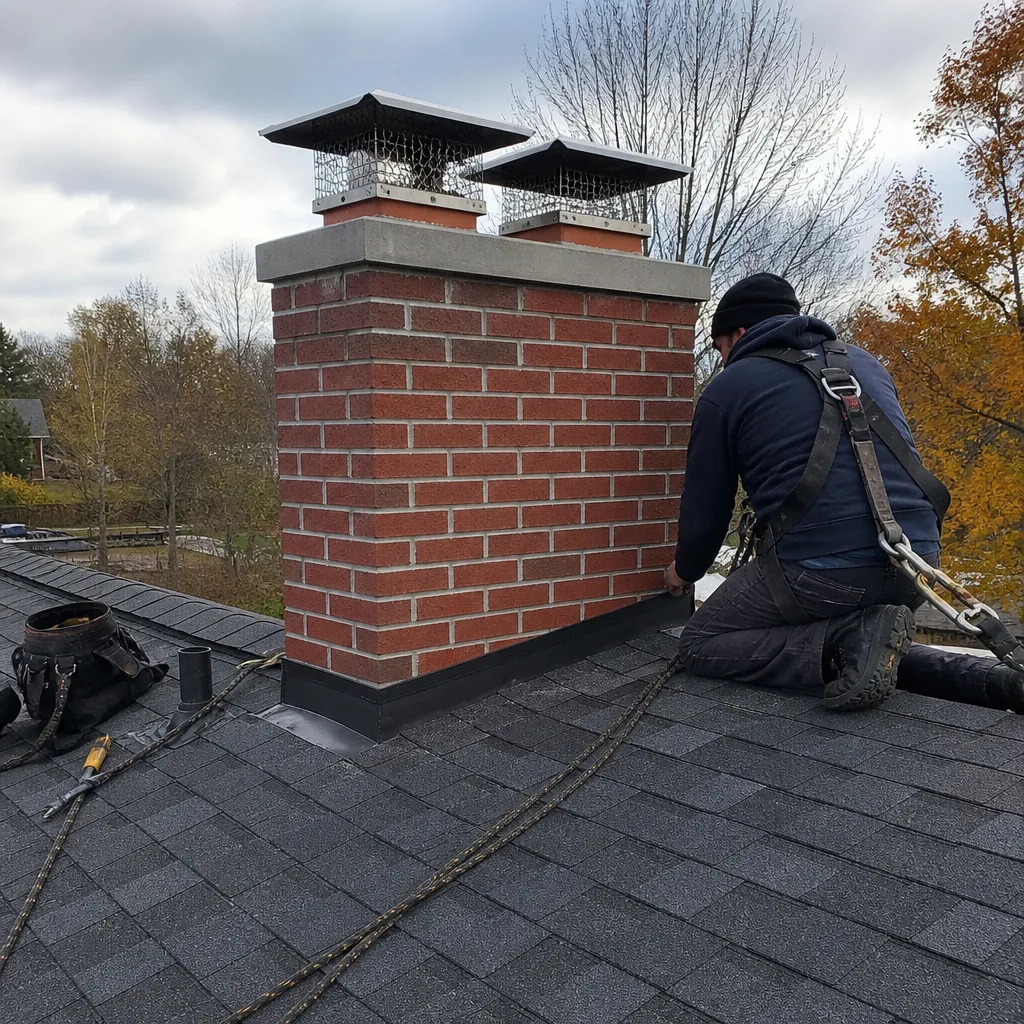
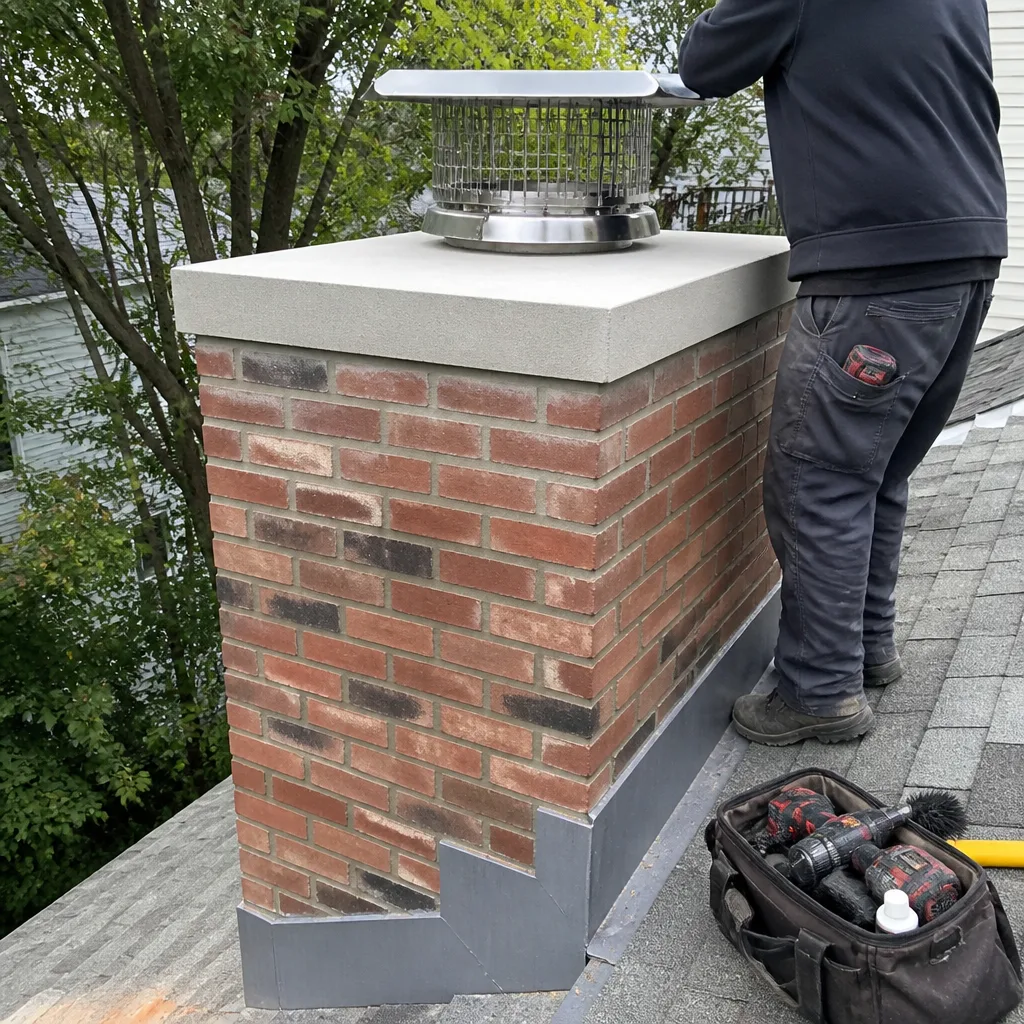
Level 1 sweep and inspection to the NFPA 211 annual standard - flue, crown, cap, and flashing checked and photographed
Chimney sweep logs do not sweep chimneys. They loosen some creosote - which then falls where a brush and vacuum still have to collect it.
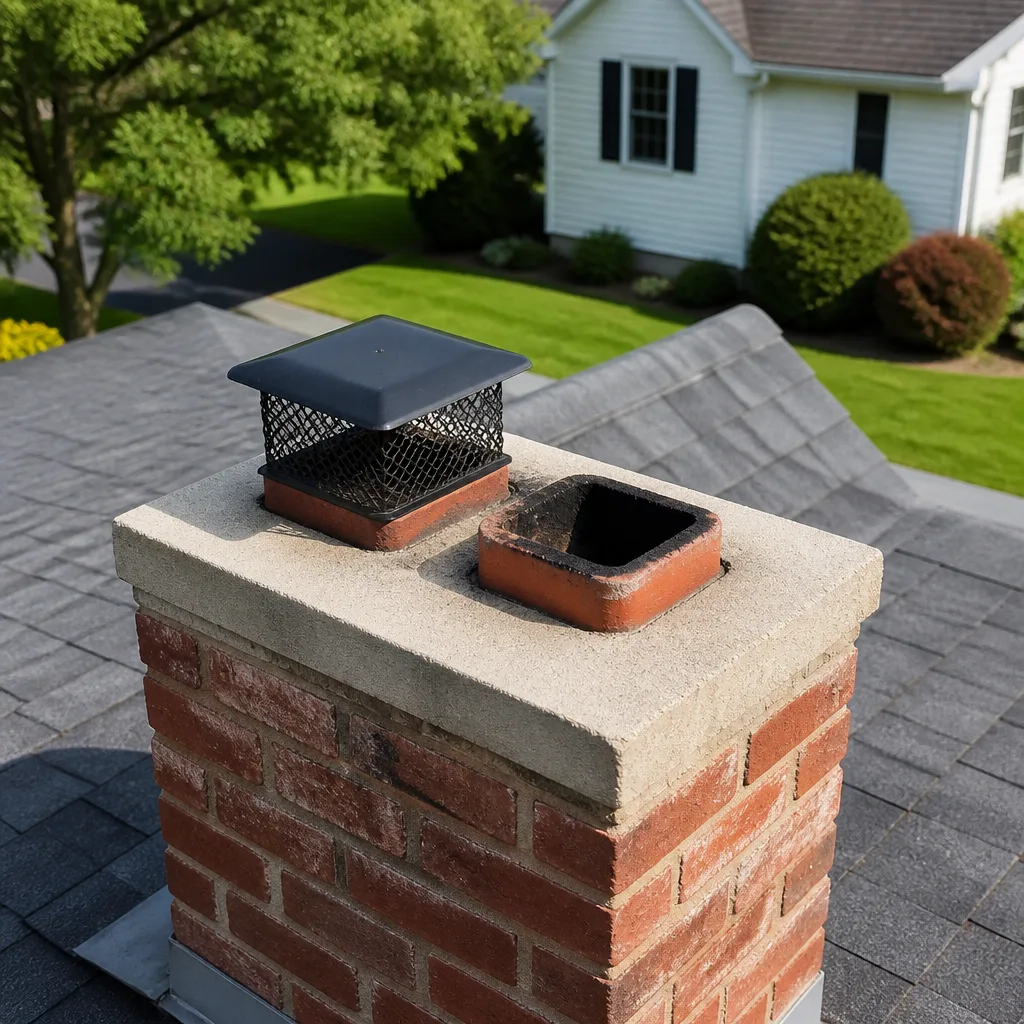
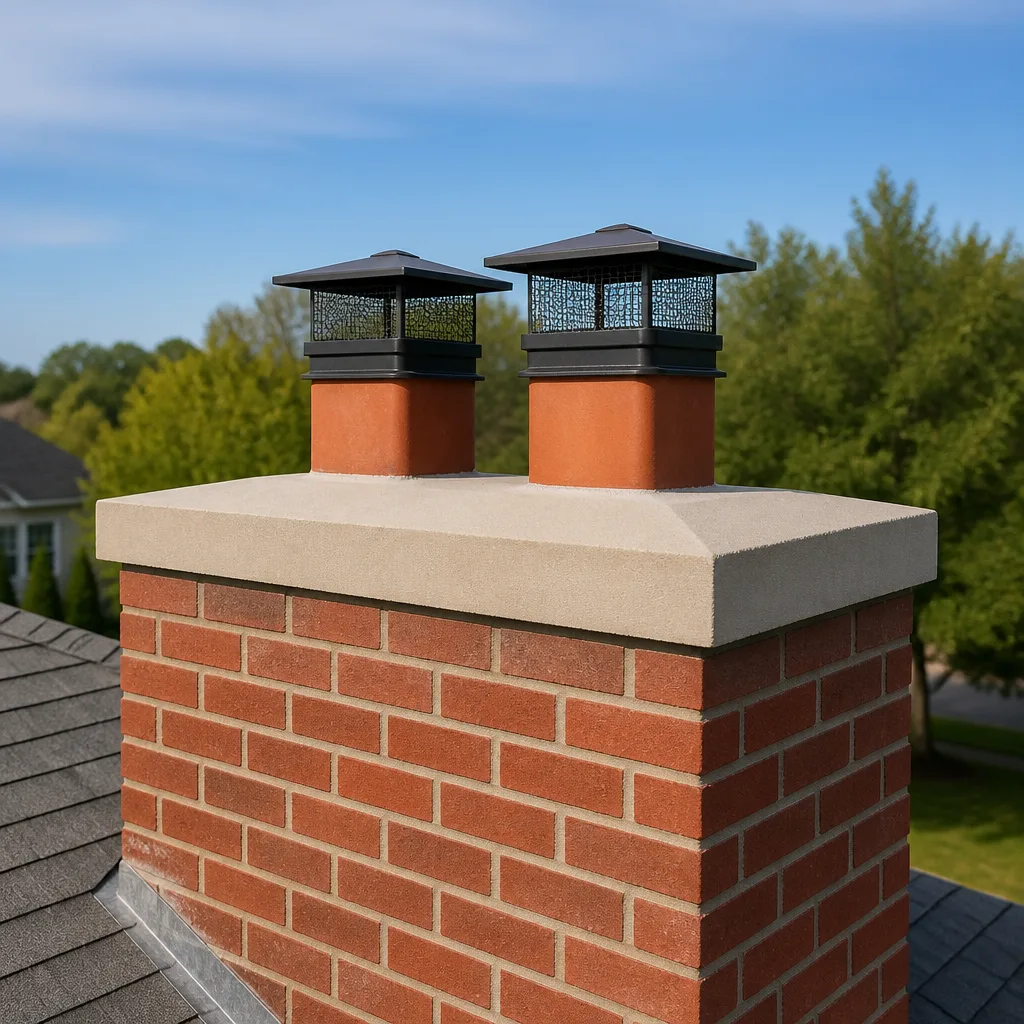
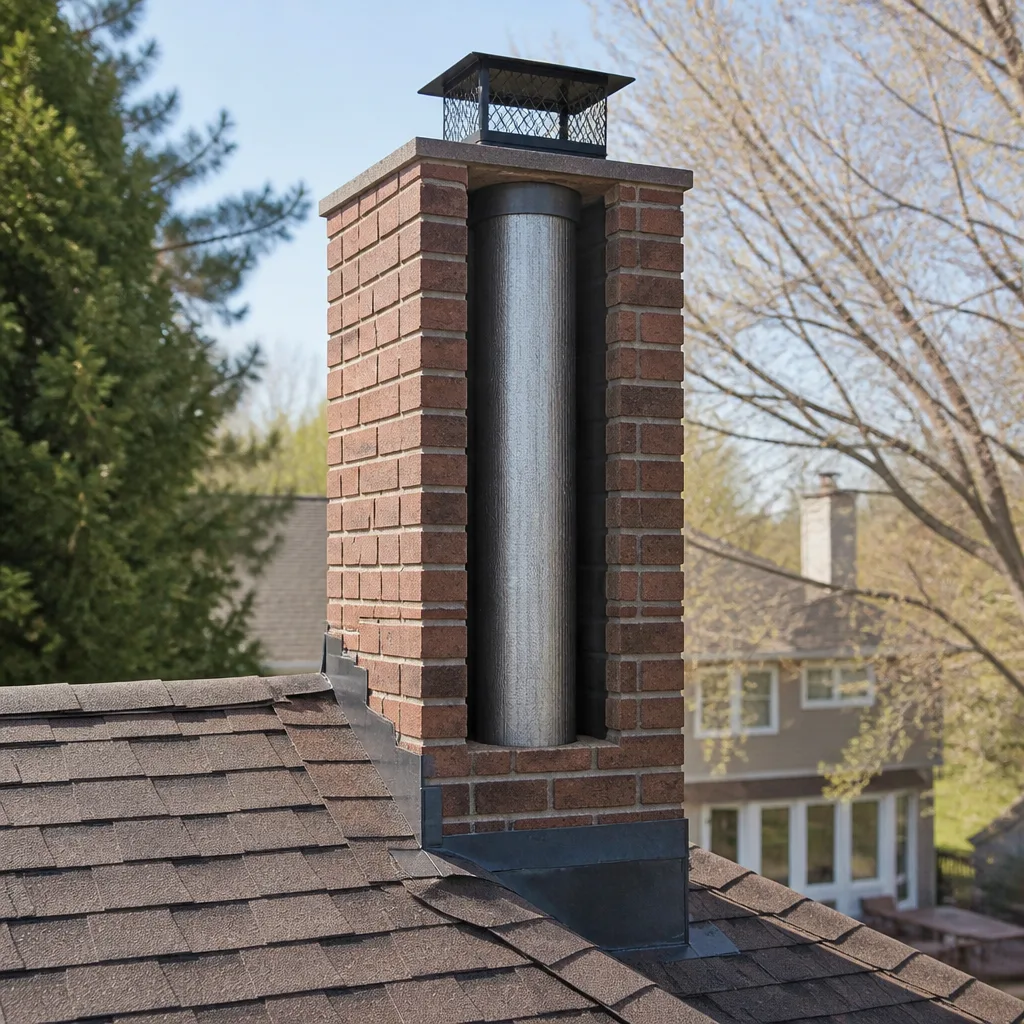
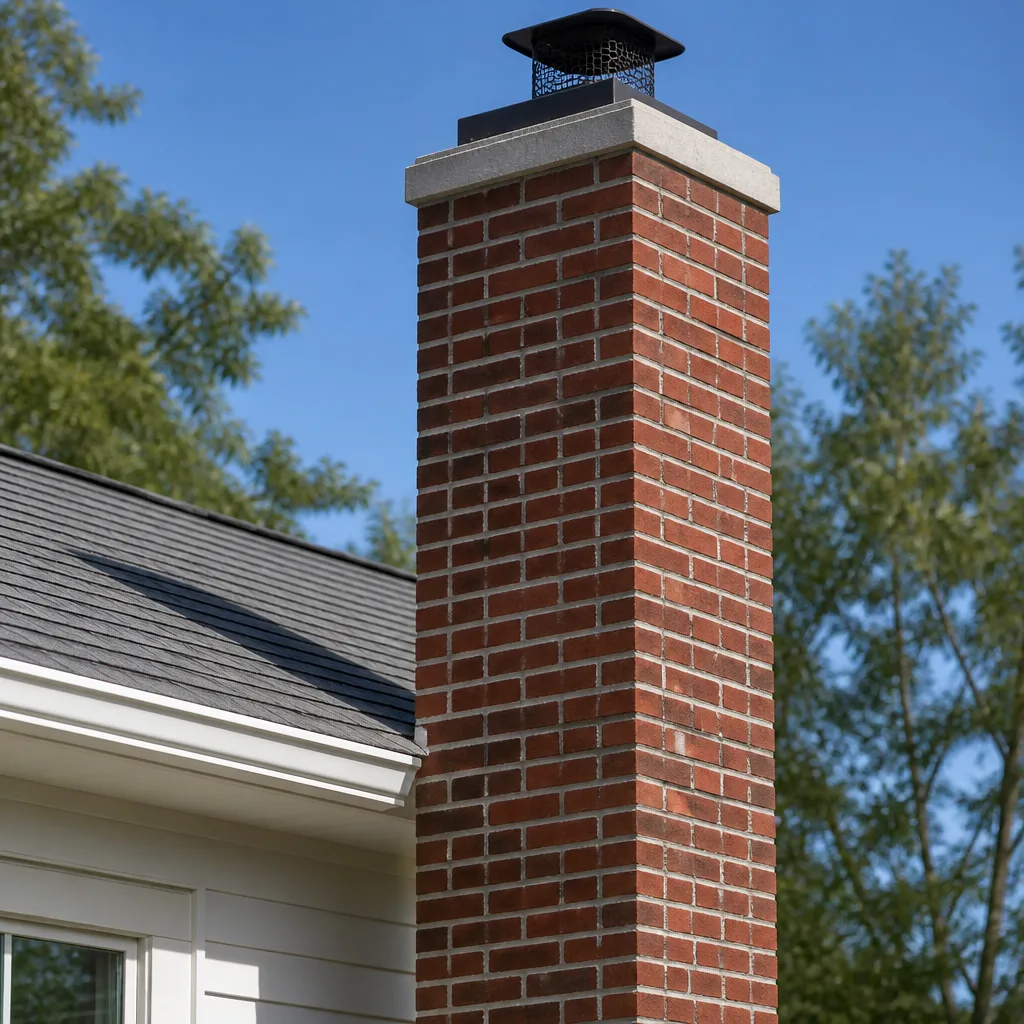
 Before
 After
After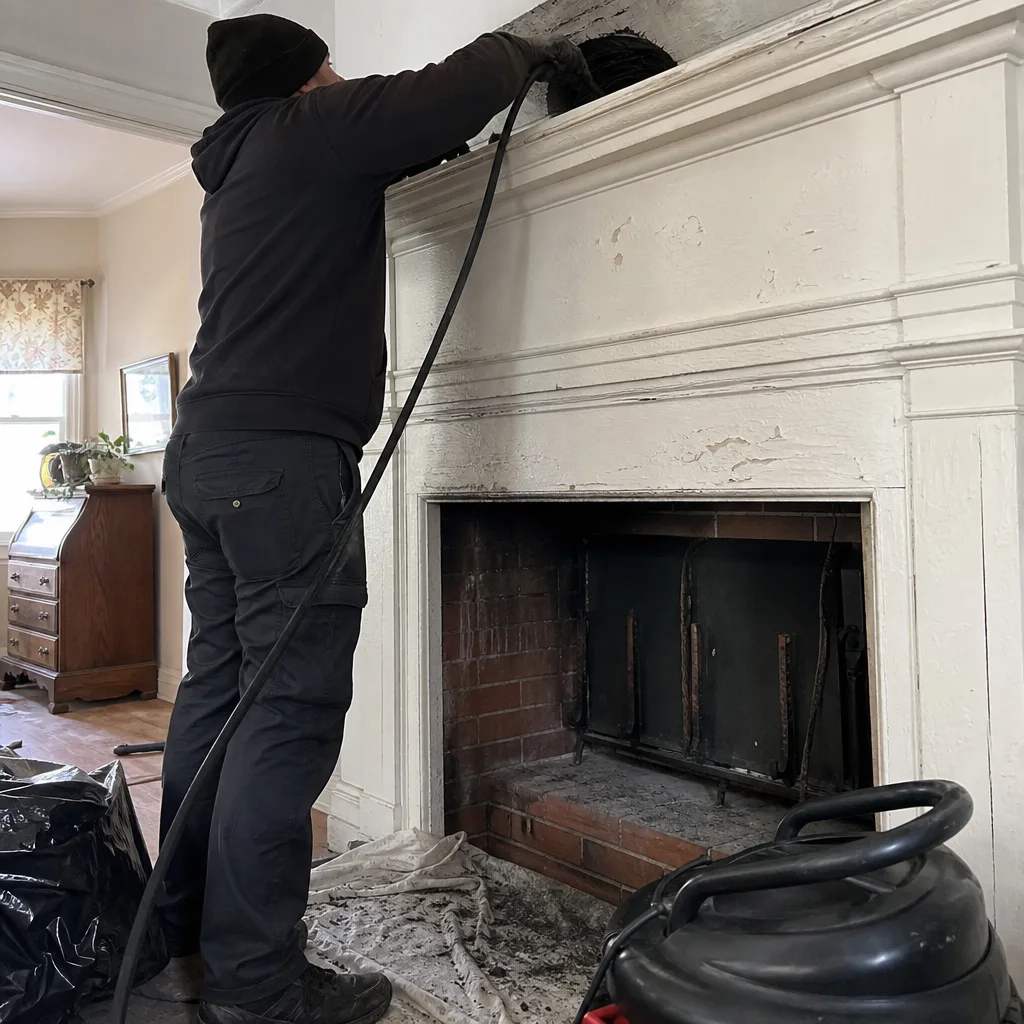 Before
 After
After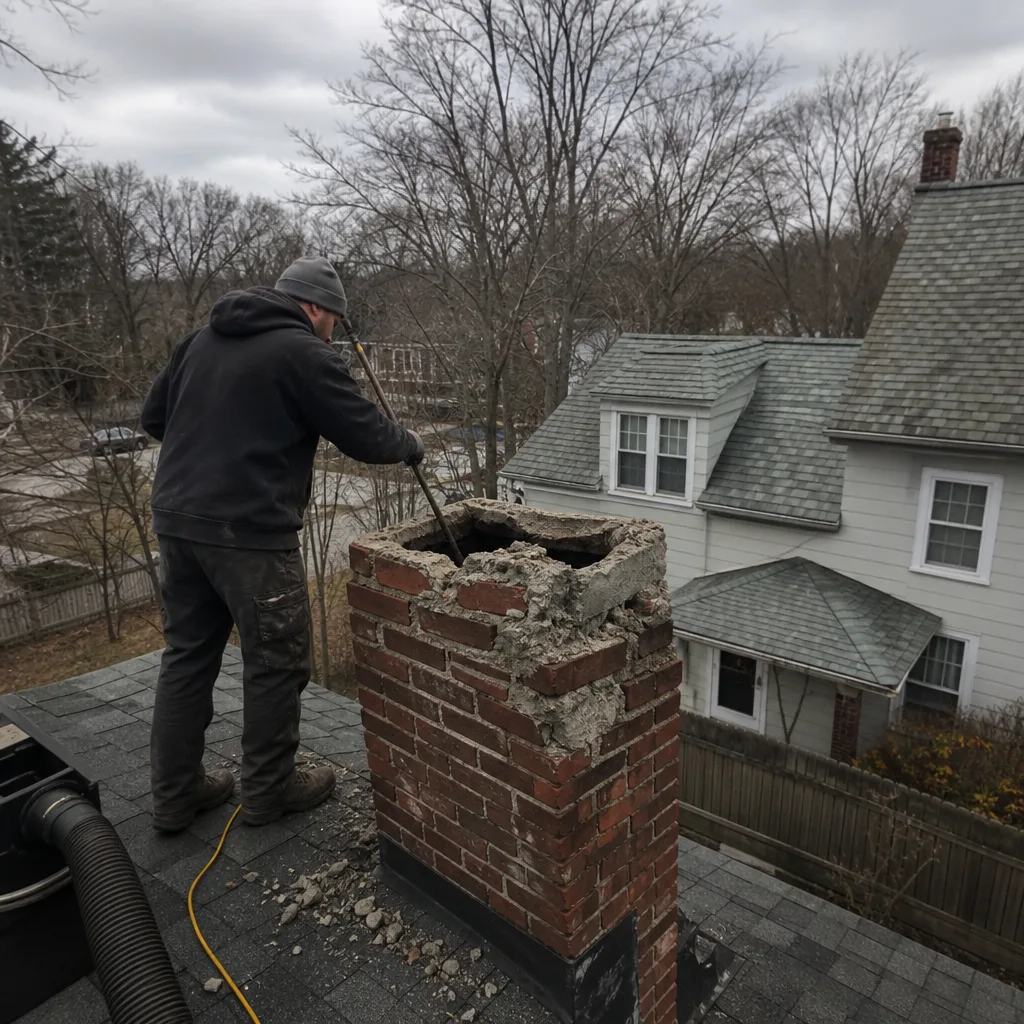 Before
 After
AfterSoot Removal in Newton, MA
Soot removal in Newton, MA typically runs between $150 and $350 for a standard fireplace or woodstove flue, and most jobs are finished in a single visit. Heavy buildup – the kind that takes years to accumulate in older Colonial and Victorian homes throughout Newton Centre, Waban, and Chestnut Hill – can push that figure higher, but you’ll know the exact number before we start. Hearthstone Chimney Co. has been providing Chimney Cleaning & Sweep services in Newton since 1984, and we’ve seen what unchecked soot does to a flue liner over a Massachusetts winter.
Soot is the fine, powdery carbon residue that coats the inside of your flue every time you burn wood, pellets, or gas logs. Unlike creosote, which is oily and requires chemical treatment, soot can be mechanically removed with the right brushes, vacuum equipment, and technique. But “the right technique” matters more than it sounds. Soot dislodged carelessly migrates through the firebox opening and settles on everything in the room – carpets, upholstery, your grandmother’s armchair. We run HEPA-rated negative-pressure vacuums before the first brush stroke goes in, so the soot we loosen is captured, not redistributed. That’s not a selling point; it’s the only acceptable way to do the job in someone’s home.
This page covers what you need to know about professional soot removal in Newton: when you need it, what we do, what it costs, and the questions we hear most often. If you’d like to read about the full scope of what a chimney cleaning appointment includes, the Chimney Cleaning & Sweep in Newton page lays that out in plain terms. Or call us now at (857) 754-5607 – a live person answers every call, every day.
When You Need Soot Removal
Newton homeowners tend to call us for soot removal in a few specific situations. Some are obvious; a few catch people off guard. Here’s what typically prompts the call:
- A visible gray or black coating inside the firebox. If you can see a dull, powdery layer on the smoke shelf, damper plate, or firebox walls above the firebrick, soot has built up past the point of casual wiping. In Newton’s older homes – many built before 1950 with original masonry flues – this often goes unnoticed for years until someone looks with a flashlight.
- A smoky smell when the fireplace isn’t in use. Soot retains moisture and odor. Newton’s humid summers and wet springs give accumulated soot time to absorb atmospheric moisture, and that combination produces a stale, acrid smell that drifts into the living room even on days when no fire has been lit.
- Dark staining on the firebox face or hearth. Soot that has migrated out of the firebox typically signals a draft problem – or simply that the flue hasn’t been cleared in several seasons. Either way, the staining is a sign the interior is overdue for service.
- Prior to lighting the first fire of the season. We recommend soot removal at least once a year for any fireplace used regularly. Newton’s heating season runs from October through April, and a flue that burned 20 or 30 fires last winter has meaningful buildup that should be cleared before the first fall fire.
- After purchasing a home in Newton. We see this constantly in neighborhoods like Auburndale and Newton Highlands, where older homes change hands and buyers have no record of the last chimney service. A Level-2 camera inspection paired with soot removal gives a new owner a documented baseline – photos they can see and a plain-English verdict on what’s there.
- Following a fireplace that burned green or wet wood. Unseasoned wood produces far more soot and creosote than properly dried hardwood. If the previous owner or a tenant burned whatever was convenient, the flue may have accumulated a season’s worth of buildup in a handful of fires.
Our Soot Removal Process
We follow the same sequence on every Newton job, whether the chimney is a single-story ranch in Newton Corner or a three-flue stack in a large Victorian near Newton Centre. Consistency is how you avoid surprises – for us and for you.
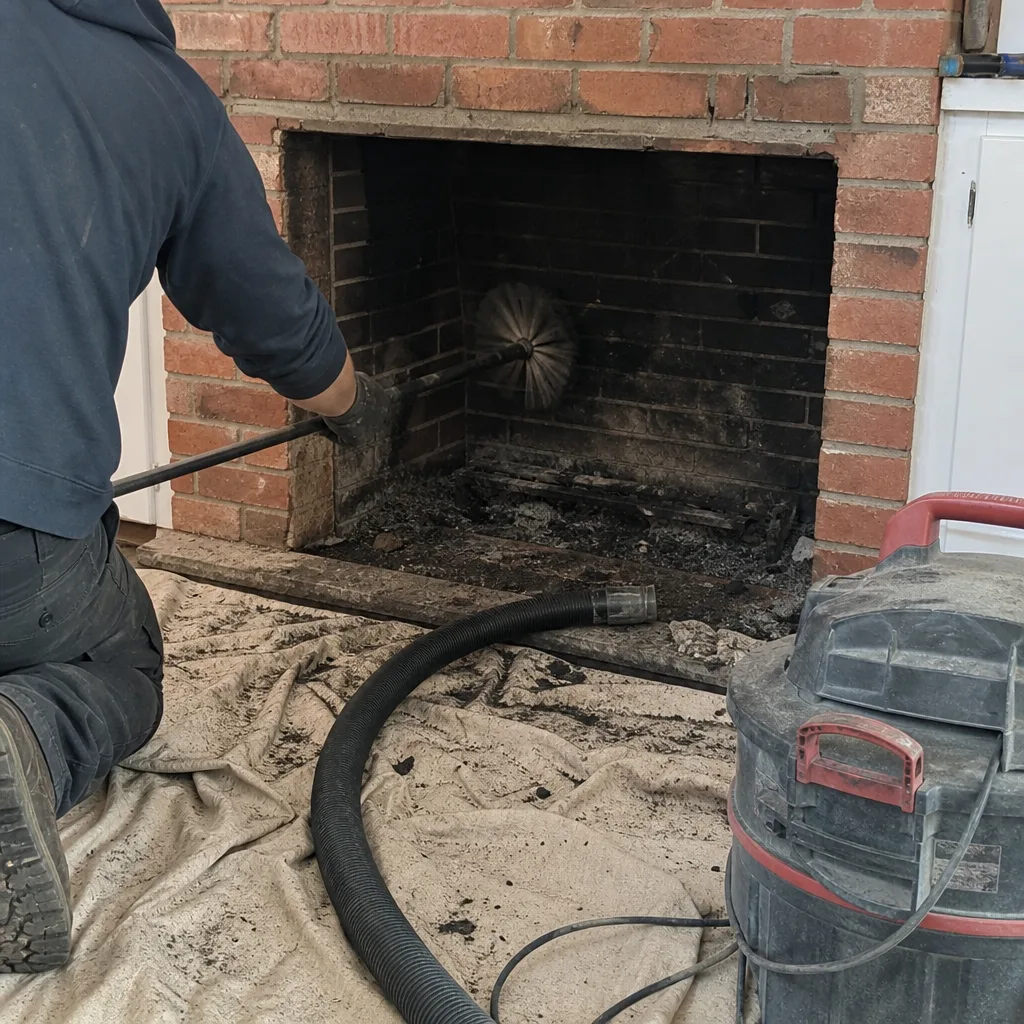
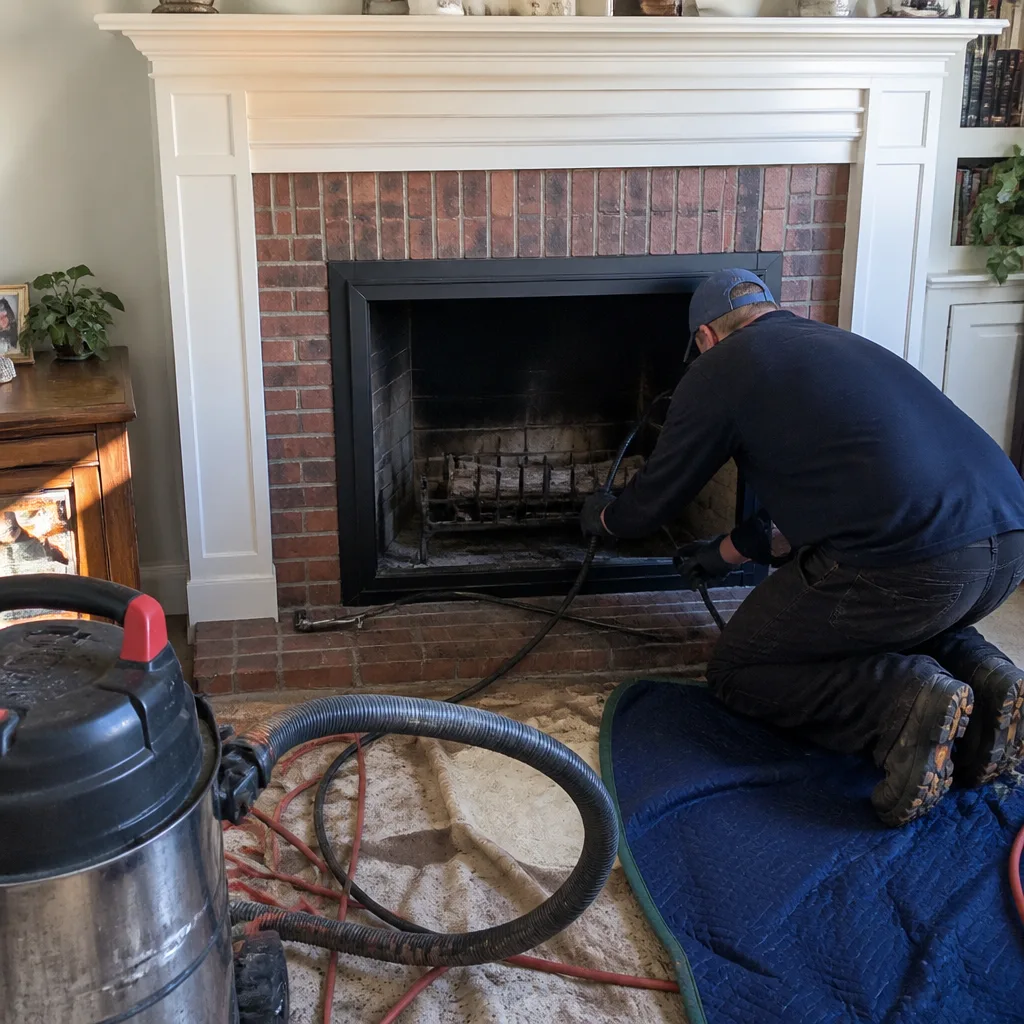
- Pre-job protection of the room. Before any equipment goes near the firebox, we lay drop cloths from the hearth to the entry point of the room and seal the firebox opening with a plastic containment barrier. Our HEPA-rated negative-pressure vacuum is running before the first brush enters the flue. This step is not optional – it’s what separates a professional job from the kind of cleanup stories homeowners tell for years afterward.
- Visual and camera inspection of the flue. We assess the flue from the firebox and from the rooftop before we begin brushing. For older masonry chimneys – which are common in Newton given the city’s housing stock – we use camera equipment to identify any cracks, spalling, or mortar joint failures that need to be addressed. You see the same images we see. Our Level-2 inspection process ends with a documented report, not a verbal summary you have to take on faith.
- Mechanical soot removal from the top down. Working from the rooftop, our technician uses rotary brush systems sized to your specific flue dimensions. We work downward so that loosened soot falls toward the vacuum rather than being pushed back up. For flues with unusual dimensions or sharp offsets – not uncommon in Newton’s older masonry stacks – we adjust brush selection accordingly. Brands like Olympia Chimney supply the professional-grade tools we use; these aren’t the wire brushes you find at a hardware store.
- Firebox and smoke shelf cleaning. The smoke shelf directly behind the damper collects more soot than any other single surface in the system. We clear it by hand using brushes and vacuum tools. A neglected smoke shelf can hold enough soot to cause a serious odor problem or, in extreme cases, interfere with proper draft.
- Full vacuum pass and debris removal. Every particle of loosened material leaves with us. We inspect the drop cloths and hearth area before we pack up. If it came out of your chimney, it doesn’t stay in your home.
- Final report and plain-English verdict. Before we leave, we walk you through what we found – including camera images if a Level-2 inspection was performed – and tell you plainly whether the flue is ready to use, needs a repair, or has a condition worth monitoring. If a repair is needed, you’ll have upfront pricing in writing before any additional work begins. No surprises on the bill.
Soot Removal Pricing in Newton
Soot removal in Newton costs between $150 and $350 for most standard residential flues. The number on our estimate is the number on your invoice – no add-ons discovered mid-job, no “while we were in there” charges added without your approval first.
Several factors affect where a specific job lands within that range:
- Flue height and accessibility. Newton’s three-story homes and steep rooflines in neighborhoods like Chestnut Hill or Newton Highlands require additional rooftop setup time. That affects the price, and we’ll tell you upfront.
- Volume of buildup. A fireplace used three or four times a winter has modest soot accumulation. A fireplace that ran heavily through an oil-shortage winter in the 1970s and hasn’t been properly serviced since – we see these in Newton’s older stock – takes more time and more passes.
- Number of flues. Many Newton homes have two or three separate flues serving a fireplace, a furnace, and a water heater or boiler. Each flue is priced separately.
- Combined cleaning and inspection. If you want a full Level-2 camera inspection documented alongside the cleaning – which we recommend for any flue that hasn’t been inspected in over two years – that’s an additional cost we’ll quote separately before we begin.
We also offer an $89 Seasonal Tune-Up, which covers a standard cleaning and basic inspection for qualifying fireplaces – a practical choice for Newton homeowners who burn occasionally and want Annual Sweep maintenance without a full-service ticket. Seniors and veterans receive a permanent 5% discount, applied automatically when you mention it. And if you have a written estimate from another company, our free second opinion costs you nothing.
Call (857) 754-5607 for an exact quote on your Newton home. Estimates are free, and the estimate you receive will reflect the actual job – not a number designed to get us in the door.
Why Newton Chimneys Need Particular Attention
Newton’s housing stock is older than the Boston metro average. A significant portion of homes in Newton Centre, West Newton, and Waban were built between 1890 and 1960, which means original or partially-rebuilt masonry flues that were designed for coal or early wood-burning habits. These older flues often have tighter clearances, more offset angles, and mortar joints that have seen decades of freeze-thaw cycles. Newton averages around 50 inches of snowfall per year and regularly swings between hard freezes and above-freezing thaws between November and March. That thermal cycling works on mortar the same way it works on a sidewalk – slowly, then visibly.
The practical effect: soot in a compromised flue isn’t just a cleaning problem. It’s a warning that the flue lining itself may need evaluation. We’ve found cracked liner sections behind relatively thin soot deposits in Newton homes where the homeowner assumed the chimney was fine because it had been “used for years without trouble.” Russell Haines, who has been working Newton chimneys since the 1980s, notes that the phrase “used for years without trouble” is the most common thing he hears right before a camera shows a problem that’s been quietly developing. The camera doesn’t lie; the soot just hides it.
Our Level-2 inspections use camera equipment that documents every section of the flue interior. The images go to you. If there’s a crack in the tile liner or a separation at a mortar joint, you’ll see it the same way we do. From there, we can discuss whether a repair using materials like HeatShield resurfacing compound or a Gelco system makes sense – or whether the issue is minor enough to simply monitor through annual cleaning. That conversation is yours to have with full information, not a sales pitch made in a living room with your back to the problem.
Soot vs. Creosote: What’s the Difference and Why It Matters
Soot and creosote are both combustion byproducts, but they behave differently and call for different responses.
Soot is light, dry, and powdery – primarily carbon particles that didn’t fully combust. It brushes off with professional equipment and isn’t flammable on its own in normal quantities.
Creosote is a different matter. It forms when volatile gases from burning wood condense on the cooler surfaces of the flue before they can fully combust. First-degree creosote looks dusty and brownish and can be swept like soot. Second-degree creosote is tar-like and requires chemical treatment before mechanical removal. Third-degree creosote – the stage Newton homeowners most need to avoid – is a hard, glazed coating that is extremely flammable and much harder to remove. A chimney fire fueled by third-degree creosote burns at temperatures that can fracture a masonry flue and ignite structural framing.
During every soot removal job, we identify which substance we’re actually dealing with. If we find creosote at any stage beyond first-degree, we’ll tell you plainly, explain the treatment options, and quote the additional work before we proceed. We won’t sweep a second-degree deposit with a brush, call it done, and leave you with a condition that represents a real fire risk. That’s not a policy we wrote recently – it’s how we’ve operated for over 42 years.
FAQs – Soot Removal in Newton
How often should I have soot removed from my Newton fireplace?
Once a year is the standard recommendation for any fireplace used regularly through the heating season. The Chimney Safety Institute of America calls for annual inspection and cleaning, and Newton’s long heating season – running from October through April for most households – means a working fireplace accumulates meaningful deposits over a single winter. If you burn fewer than 10 fires a year, every other year may suffice, but a quick visual check each fall is still worthwhile. Call (857) 754-5607 and we can help you figure out the right interval based on how you use your fireplace.
Is soot removal something I can do myself?
Consumer chimney brushes exist, but cleaning a flue without professional vacuum containment means releasing soot into the room – and fine carbon particles settle on every surface. Beyond the mess, a homeowner working from below can’t inspect the full flue length or identify liner damage, offset blockages, or early-stage creosote. The cleaning is only part of the value; the inspection that comes with it is where problems get caught before they become expensive. We handle the full job cleanly, in one visit, and we document what we find.
How much does soot removal cost in Newton?
Most standard residential soot removal jobs in Newton run between $150 and $350, depending on flue height, the volume of buildup, and the number of flues being serviced, as detailed in our How Much Does Chimney Cleaning & Sweep Cost? (2026 Price Guide) - Newton, MA. Our $89 Seasonal Tune-Up covers a cleaning and basic inspection for qualifying fireplaces. All pricing is upfront – the number on the estimate is the number on the invoice. Call (857) 754-5607 for a free estimate specific to your home and flue configuration.
What’s the 90-Day Done Right Promise?
If the soot removal job – or any work we do – isn’t right when we leave, we come back and make it right. That commitment is in writing, with no paperwork required on your end and no arguing. It’s covered under the K.E.Y.S. values code we’ve operated by for over 42 years: Krafted right, Every time, Your home first, Standing behind it. It means that when Russell Haines puts his name on a job, it stays right – or he comes back until it is.
Book Your Newton Soot Removal
If your Newton chimney is overdue for cleaning, or you’ve noticed any of the warning signs above – odor, visible buildup, staining on the firebox face – the straightforward move is to call before the heating season starts rather than after the first fire of fall. We’re not going anywhere; Hearthstone Chimney Co. has been serving Newton since 1984 and intends to be here for the next forty years. You can learn more about the full range of chimney cleaning and maintenance we provide by visiting our home page.
Call (857) 754-5607 to schedule a free estimate. A live person answers every call, every day – no voicemail, no callback queue, no automated system to navigate. Most jobs are completed in a single visit, and the price we quote is the price you pay. Done right, and we stand behind it.
Written by Russell Haines, Owner at Hearthstone Chimney Co., serving Newton since 1984.