
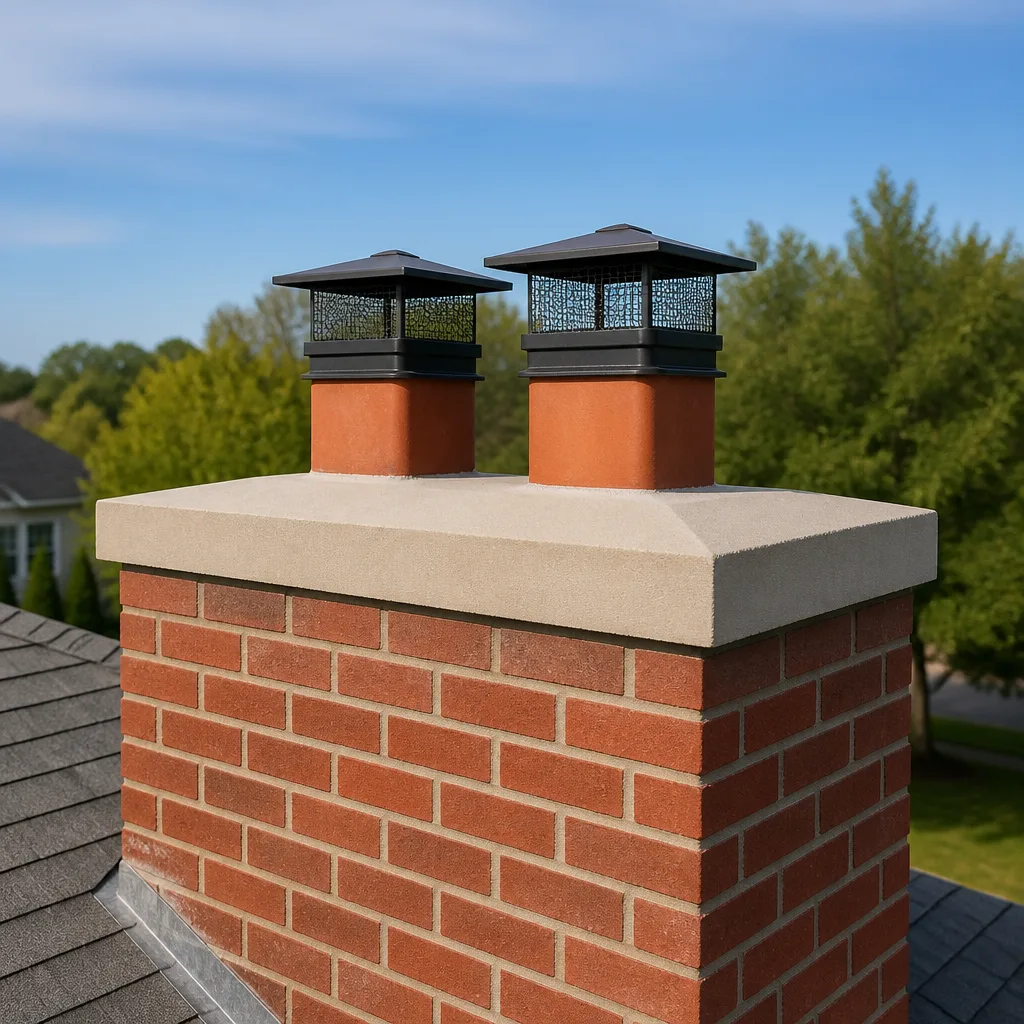
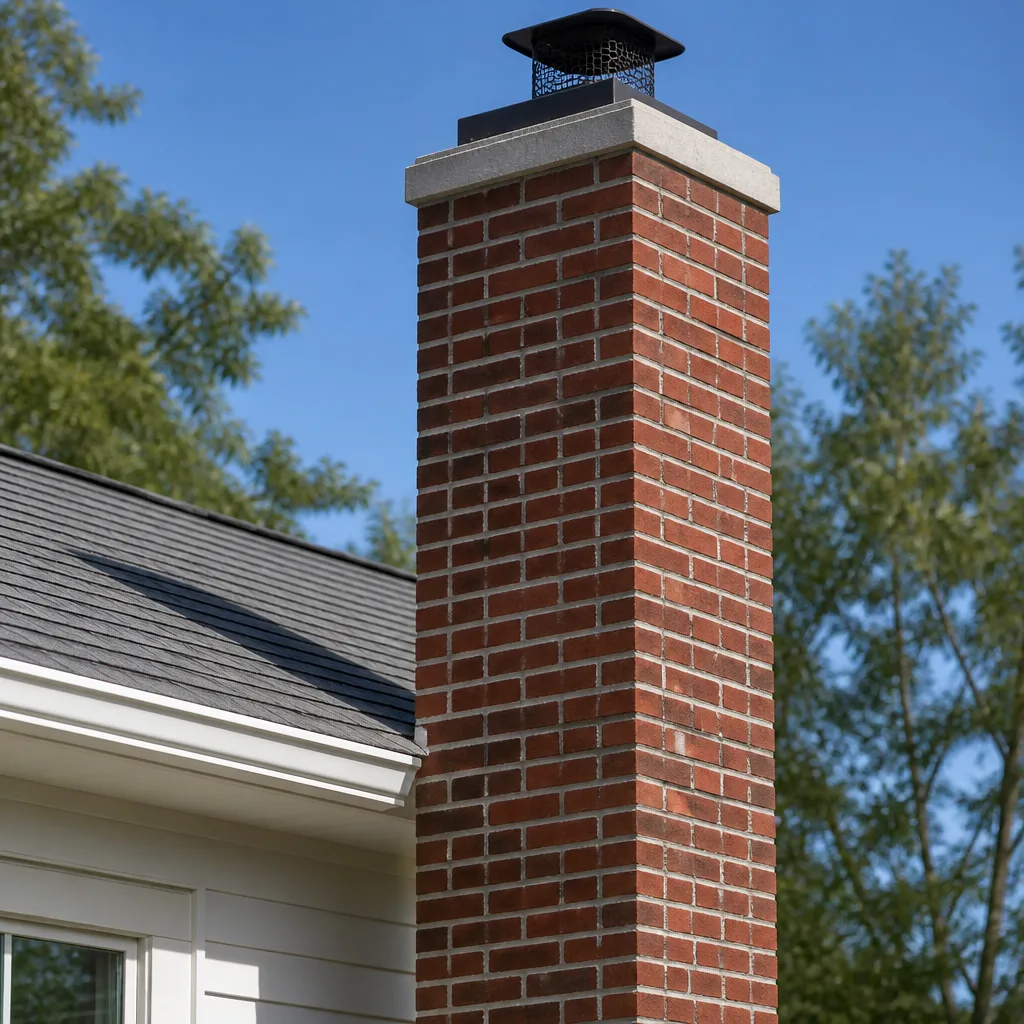
Level 1 sweep and inspection to the NFPA 211 annual standard - flue, crown, cap, and flashing checked and photographed
Chimney sweep logs do not sweep chimneys. They loosen some creosote - which then falls where a brush and vacuum still have to collect it.
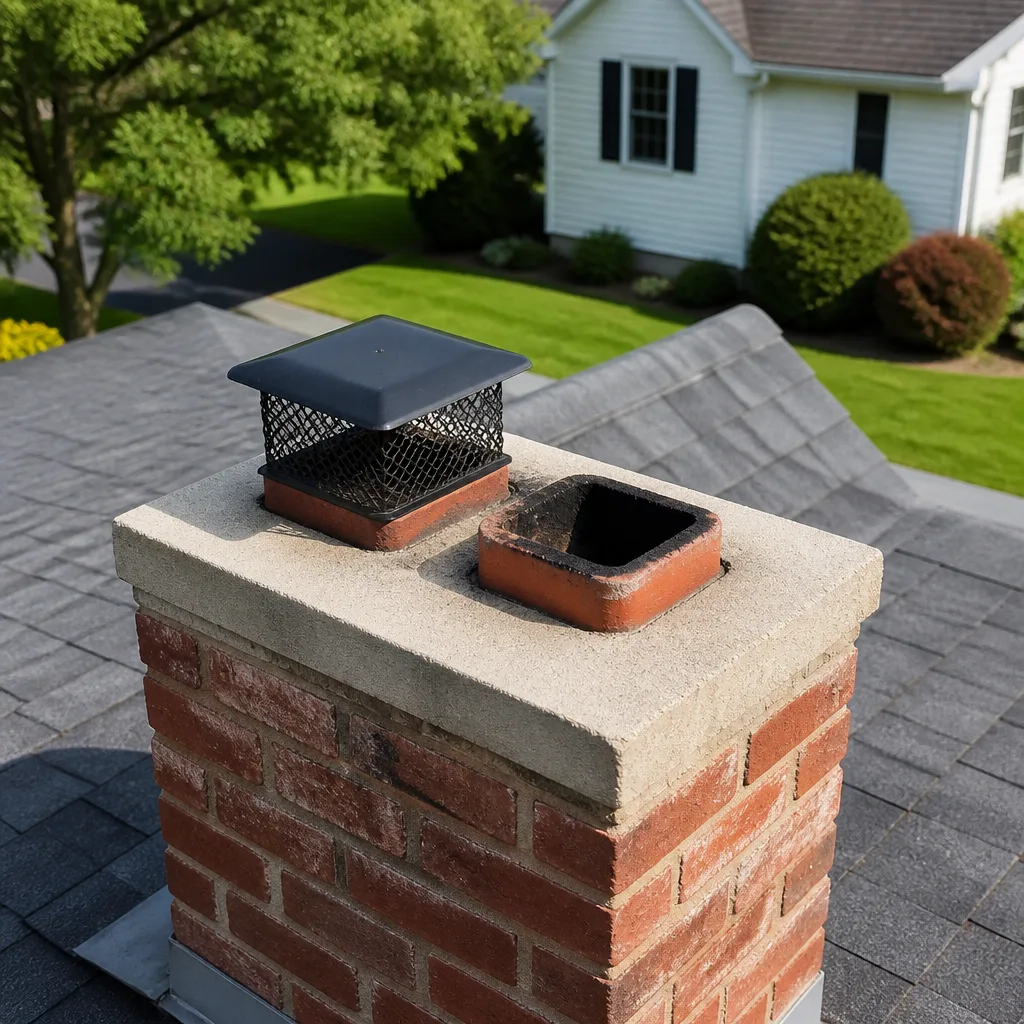
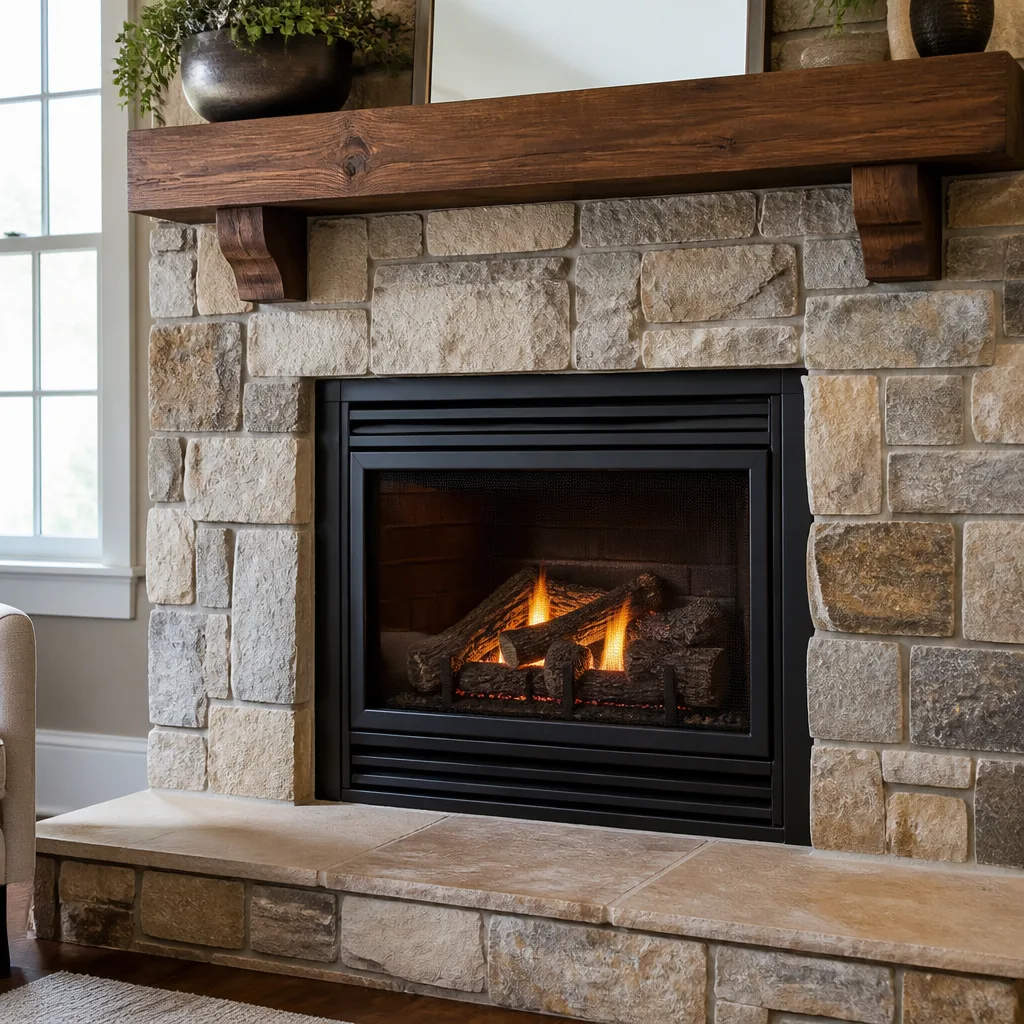
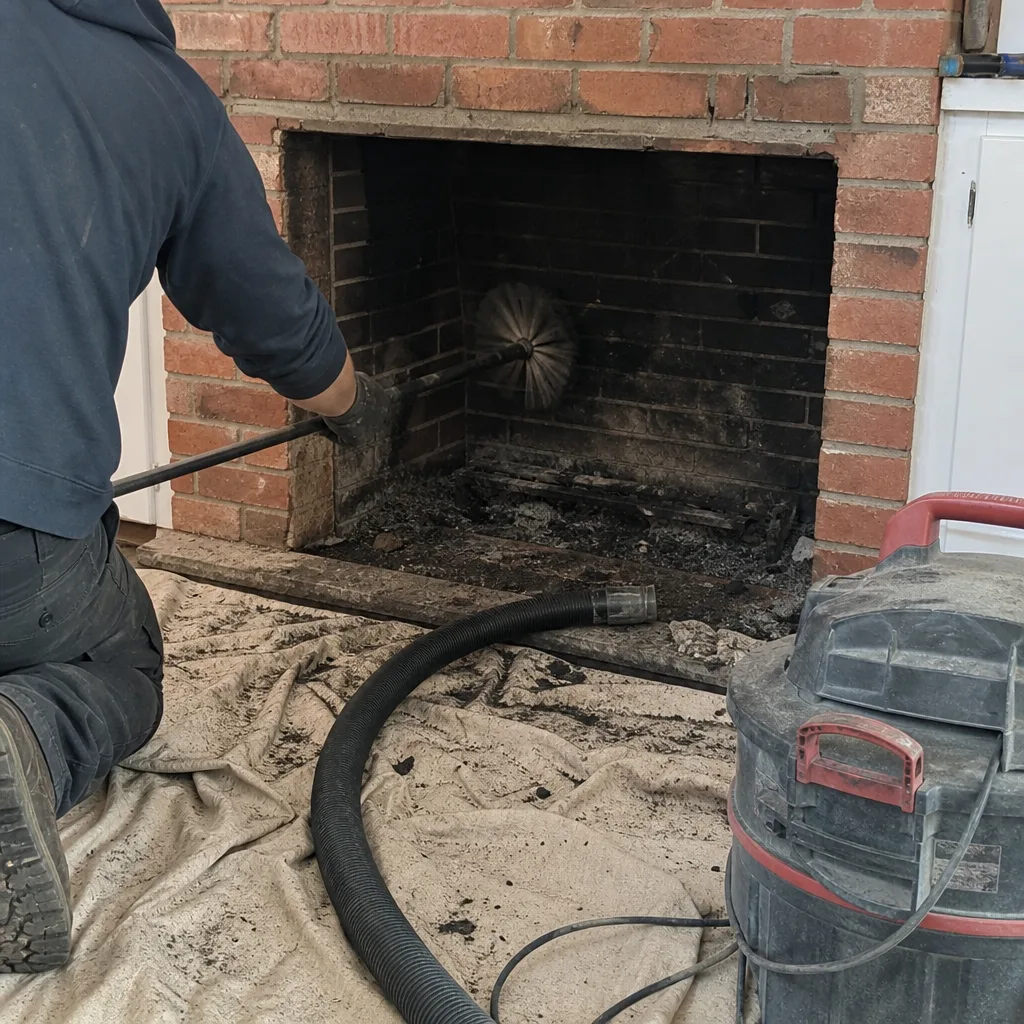 Before
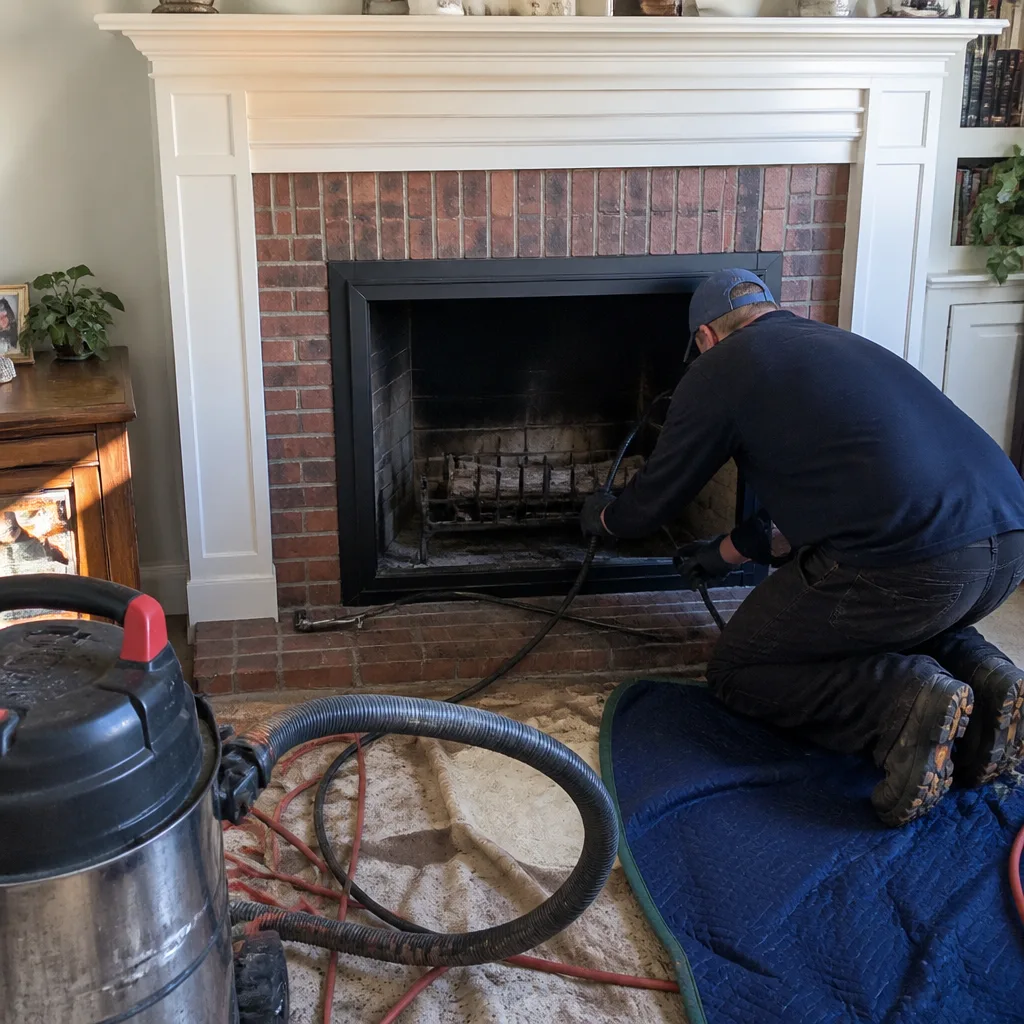 After
After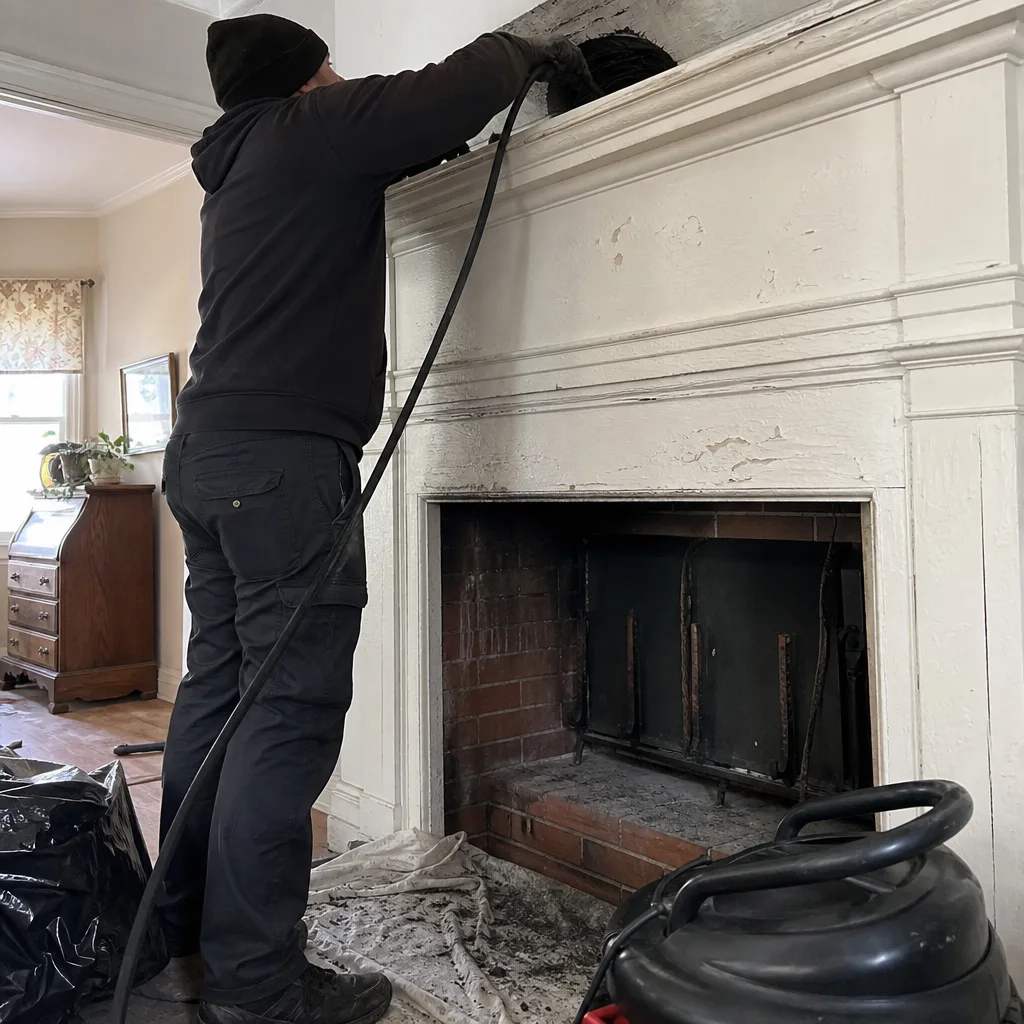 Before
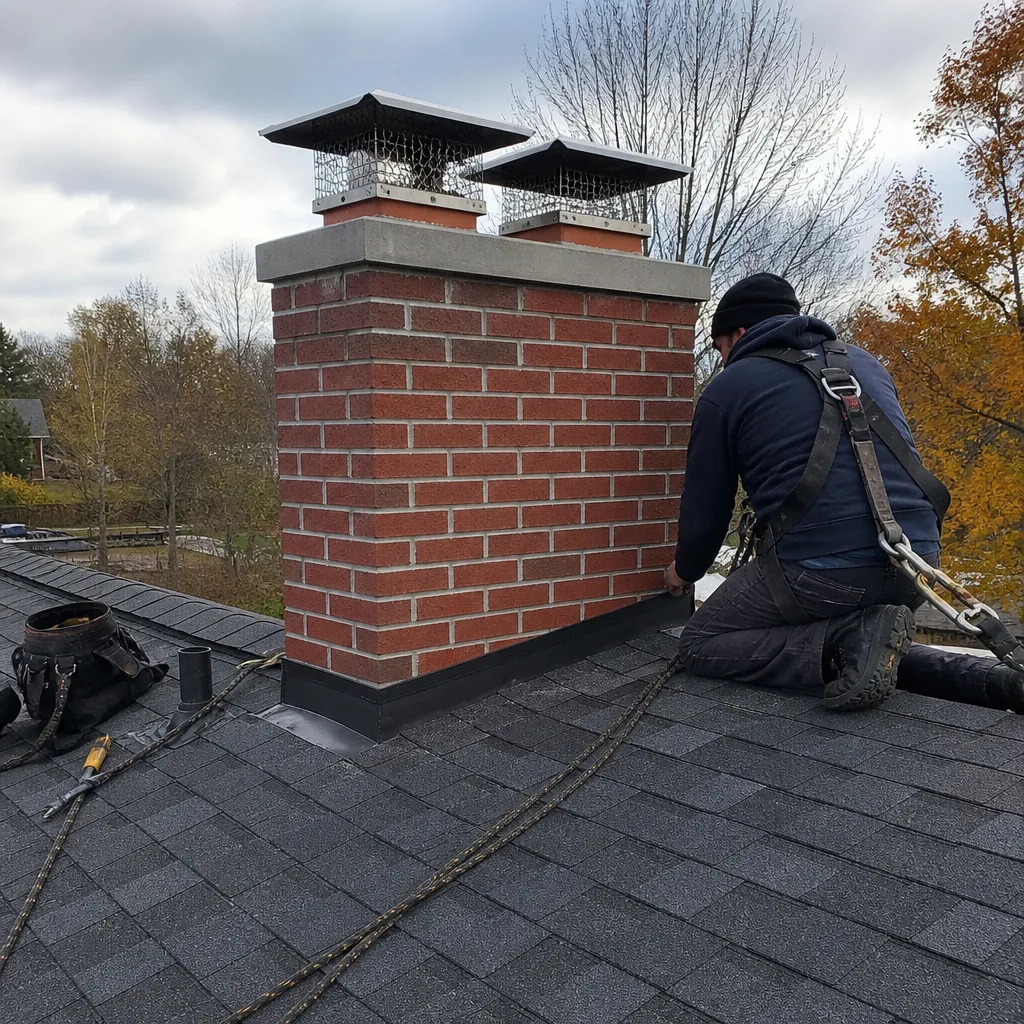 After
After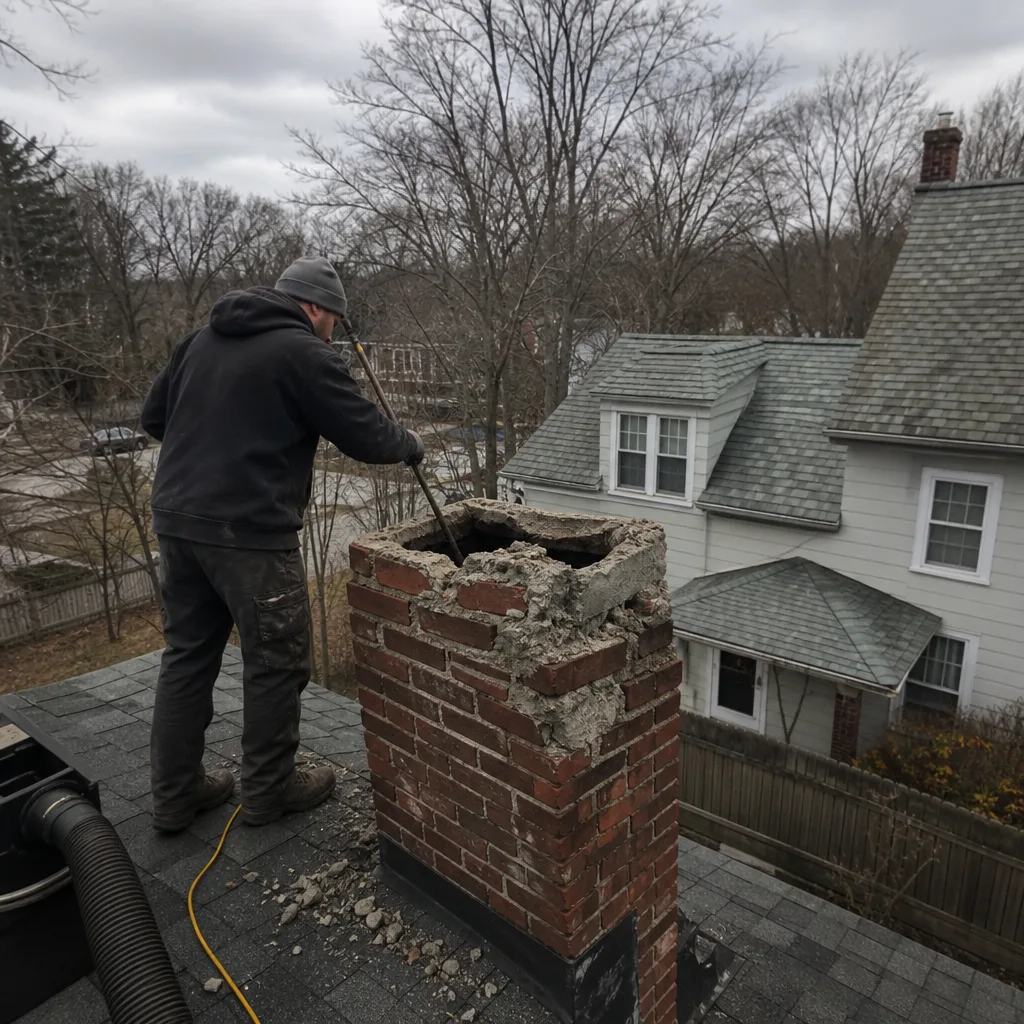 Before
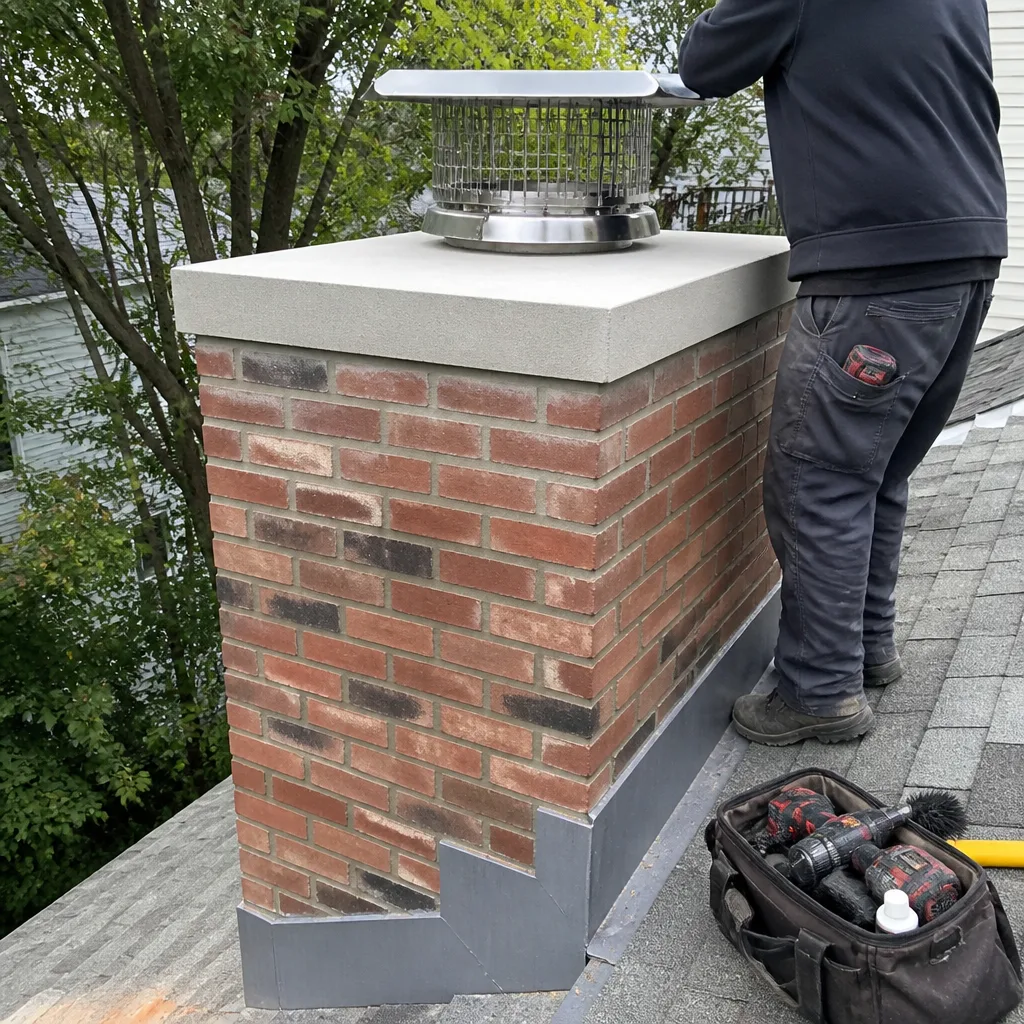 After
AfterOlympia Chimney Flue Liner Replacement: The Newton Owner’s Guide
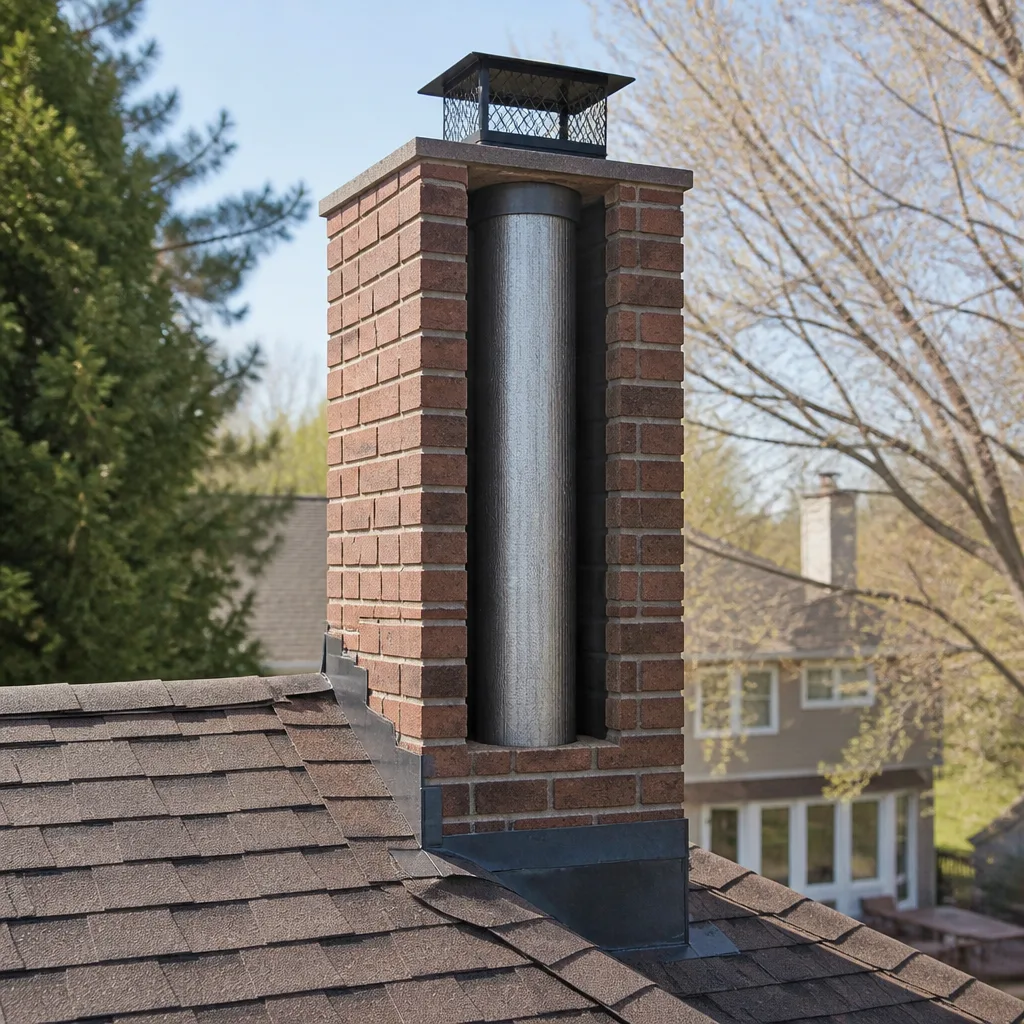
Olympia Chimney flue liner replacement in Newton typically runs $2,800-$5,200 installed, depending on liner diameter, chimney height, and whether the existing clay tiles need extraction. We stock Olympia Chimney-compatible stainless steel liners in common diameters from 5 to 8 inches, and most Newton replacements are completed in a single day. If you’re seeing flakes in the firebox or smelling smoke in upstairs rooms, the liner has likely cracked or separated at a joint.
Newton’s freeze-thaw cycles hit harder than most homeowners expect. Water gets behind cracked clay tiles, expands in January, and turns a hairline split into a gap that lets combustion gases leak into wall cavities. We’ve pulled failed liners from colonials in Newton Centre where the original clay was installed in the 1920s, and from 1980s splits in Nonantum where the builder-grade liner never matched the appliance output. Either way, the fix is the same: measure correctly, match the alloy to the fuel type, and install it so it does not move.
Which Olympia Chimney Models This Applies To
Olympia Chimney manufactures UL-listed stainless steel chimney liners in the 304 and 316 alloy grades, with the 316L series rated for pellet and oil appliances where condensation runs aggressive. The critical match is not the brand name on the box but the diameter-to-appliance pairing: a liner too small chokes draft and soots up fast; too large, and the flue gas cools before it exits, causing creosote to plate the walls.
We see three identification patterns in Newton homes. First, the original installation paperwork, which sometimes lists an Olympia part number like OCL-625 or OCL-830. Second, a stamped collar at the top of the liner where it meets the flashing. Third, and most common, no label at all because the liner was installed thirty years ago and the tag burned off. When that happens, we measure inside diameter with a chimney ruler and check the appliance BTU output against the NFPA 211 tables. Olympia’s 5.5-inch oval-to-round adapters fit several pre-fab fireplace units common in the 1990s Newton builds near Crystal Lake, and getting that adapter wrong means a draft that never quite stabilizes.
OEM Olympia liners carry the factory warranty, but we also source compatible 316L flex from DuraFlex and rigid sections from Copperfield when the job calls for it. The alloy specification matters more than the brand stamp. We will tell you which route fits your setup and why.
Signs Your Olympia Chimney Flue Liner Replacement Is Failing
- Clay flakes or grit in the firebox. This means the original terra cotta liner is spalling, usually from thermal shock or water infiltration. The pieces you see are the warning; the pieces lodged in hidden cracks are the problem. Once the inner wall is compromised, combustion gases can reach the brick surround.
- Smoke odor in upstairs bedrooms or attic. A separated liner joint or cracked tile creates a pressure leak. In Newton’s older two-and-a-half-story homes, that smoke finds the path of least resistance through balloon framing or chimney chases that run past second-floor closets. The smell is your detector.
- White efflorescence on exterior brick. That powder is minerals left by water migrating through the masonry. It means moisture is getting in, freezing, and pushing the liner and brick apart. Left alone, it becomes spalling brick faces and a liner that no longer seats properly.
- Draft that worked fine last season but fails now. A liner that has shifted, collapsed at a joint, or built up enough creosote to narrow the passage will starve the fire of makeup air. The change is usually gradual until one cold morning it will not light at all.
- Visible rust streaks from the cleanout door. If you have a stainless liner already and see rust, the alloy was likely 304 in an oil or pellet application that needed 316L. Or the cap failed and water has been sitting in the flue. Either way, the metal is thinning.
Replacement Cost & What’s Included
| Scope | Newton Price Range |
|---|---|
| Flexible stainless liner, 5-6 inch, gas appliance, straight run | $2,800-$3,600 |
| Flexible stainless liner, 6-8 inch, wood burning, with insulation wrap | $3,400-$4,500 |
| Rigid liner with multiple offsets, clay tile extraction included | $4,200-$5,200 |
| Top plate, rain cap, and connector hardware | $280-$450 |
| Level-2 camera inspection with photo report | Included |
The spread comes down to three factors: how many stories we are running (a three-story colonial on Walnut Street takes more material and rigging than a ranch near Route 9), whether we are extracting collapsed clay tiles or sliding the new liner into an empty flue, and whether the appliance connection needs a custom fabricated offset. We price it upfront, itemized, and that number does not change unless you add scope. The 90-Day Done Right Promise covers the installation. The liner itself carries the manufacturer’s warranty, twenty years or lifetime depending on the alloy grade.
We also apply our standing offers where they fit: $50 off any repair over $250, and a permanent 5% senior and veteran discount. If another company handed you an estimate that does not sit right, we will come out for a free second opinion.
DIY or Call Us?
There is exactly one thing a homeowner can safely check: shine a flashlight up the flue from the firebox and look for daylight obstructions, obvious gaps, or tile shards on the smoke shelf. That is it. Everything past that point involves working on a roof, handling sharp stainless edges, and ensuring the liner is sized to the appliance using combustion math, not guesswork.
The real risk is not the installation itself but what you cannot see from the top or bottom. A liner that looks intact can have a separated joint two feet down, hidden by a soot ledge. Without a camera inspection, you are replacing what you guess is wrong and missing what actually is. In Massachusetts, any liner installation in a masonry chimney requires compliance with 527 CMR and a permit in most Newton jurisdictions. We pull those permits, document the inspection with photos you can see, and stand behind the result in writing. If the chimney is fine, Russell Haines will tell you. If it is not, he will show you exactly why.
Call (857) 754-5607 for a free estimate. A live person answers, 24 hours a day.
FAQs
A properly installed 316L stainless liner should last twenty-five years or more, but Newton’s coastal-influenced winters accelerate corrosion on 304 alloy if the cap leaks. We inspect liners at fifteen years as a matter of course. Call (857) 754-5607 to schedule - estimates are free.
HeatShield resurfacing can seal minor cracks in clay tile if the structural shell is sound, but it is not suitable for separated tiles, collapsed sections, or liners that have shifted out of alignment. We determine eligibility with a camera inspection; if resurfacing is viable, we will quote it honestly. Call (857) 754-5607 for an exact quote - estimates are free.
Most Olympia Chimney liner replacements in Newton are completed in one day, though clay tile extraction or multiple chimney bends can extend to a second day. We stock common diameters on our trucks to avoid ordering delays. Call (857) 754-5607 to check availability.
We stock flexible 316L liners in 5, 6, 7, and 8 inch diameters, along with Olympia-compatible top plates and connectors. Rigid or oval configurations we custom-order with a three-to-five-day lead time. Either way, we confirm fit with an on-site measurement before anything ships. Call (857) 754-5607 to arrange a look.
Written by Russell Haines, Owner, Hearthstone Chimney Co. at Hearthstone Chimney Co., serving Newton and nearby areas.